If you are weighing up an air source heat pump, the first question is almost always the same: what will it actually cost? The honest answer is that prices vary quite a bit from home to home, because every job is quoted against your specific property. What you can rely on is that the Boiler Upgrade Scheme and 0% VAT bring the figure you actually pay down considerably. This guide breaks down what drives the price, how the grants change the maths, and what a good quote should always include.
What an installed price covers
An air source heat pump quote covers the heat pump unit itself, a hot water cylinder, controls, any changes to your pipework, and the labour to fit and commission it. What the figure comes to depends largely on the size and heat demand of your property and how much work the installation requires, so a price is only meaningful once an installer has surveyed your home.
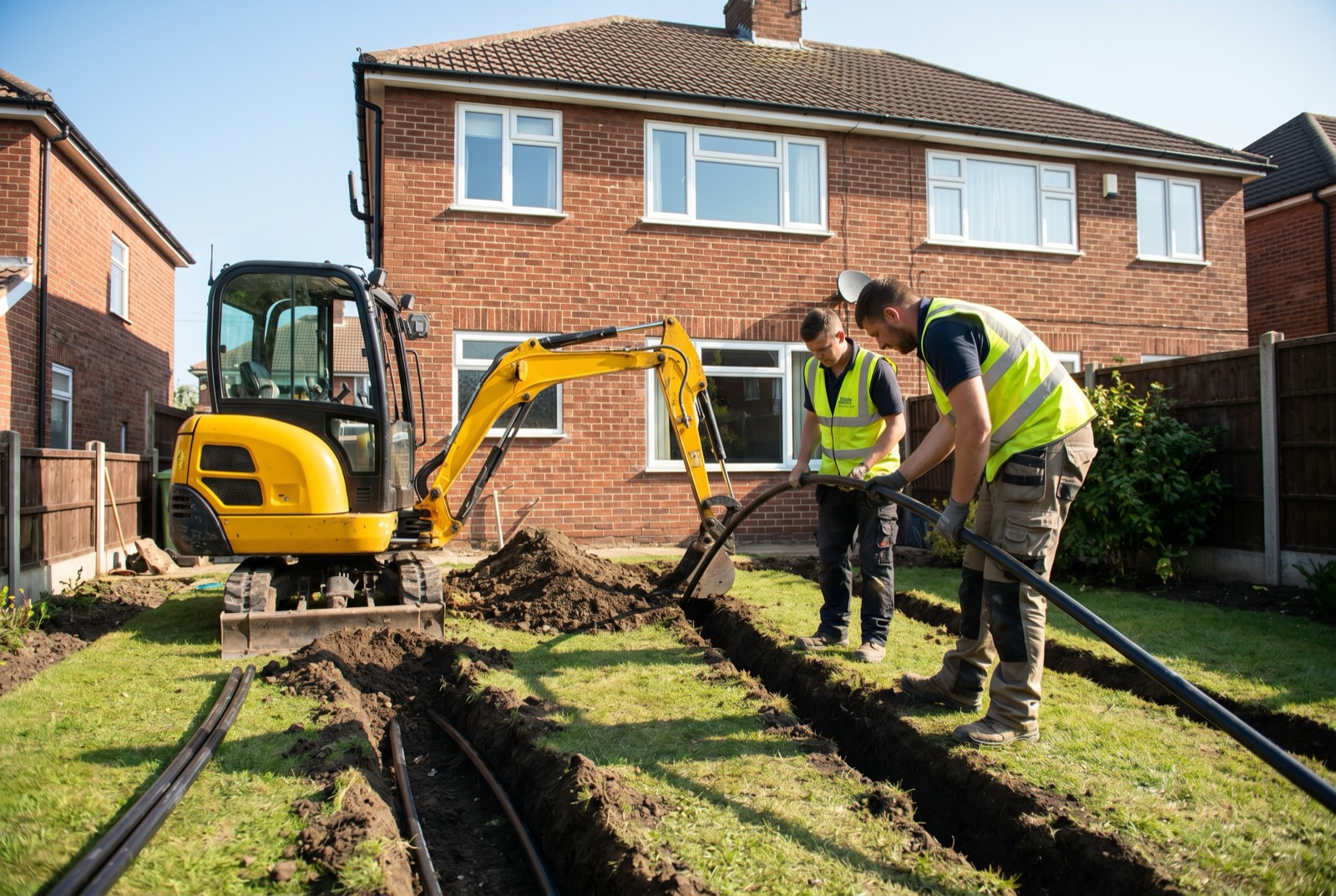
A smaller, well-insulated home with suitable existing radiators tends to be cheaper to convert. A larger or older property that needs upgraded radiators, new pipework, or more careful system design costs more. It is worth remembering that a ground source heat pump is a different proposition entirely — more expensive again — because it involves boreholes or ground loops, so the two should not be confused.
What actually drives the cost
Two installations at the same headline price can involve very different amounts of work. The main factors that move the number up or down are practical ones to do with your specific home, not just the brand of pump you choose.
- Property size and heat demand — a bigger home needs a higher-output pump and a larger hot water cylinder.
- Radiators or underfloor heating — heat pumps run best at lower flow temperatures, so some radiators may need upsizing; existing underfloor heating is usually ideal.
- Insulation levels — a well-insulated home needs a smaller, cheaper system and runs more efficiently; poor insulation can push you towards a larger unit.
- System design and pipework — the layout of your home, where the pump can sit outside, and how far it is from the cylinder all affect labour and materials.
- Hot water needs — the number of bathrooms and occupants influences cylinder size.
How grants change the net price
Two schemes make a real difference to what you pay. The Boiler Upgrade Scheme (BUS) offers up to £7,500 off an air source heat pump in England and Wales. It is administered by Ofgem, has no income or means test, and runs until 31 March 2028. Crucially, an MCS-certified installer applies for it on your behalf and takes the £7,500 off your bill upfront — you do not pay out and claim it back later. To qualify you need a valid EPC with no outstanding recommendations for loft or cavity wall insulation.
On top of that, heat pumps are zero-rated for VAT until 31 March 2027 (HMRC, UK-wide). This 0% rate is applied automatically on your installer's invoice, so it is already baked into the prices a reputable installer quotes you. If you are in Scotland, Home Energy Scotland offers a grant of up to £7,500 plus an interest-free loan instead of BUS, so the route differs but the support is comparable.
The shape of the maths is simple, even though your own figures will differ. Whatever your installer quotes with 0% VAT already applied, the £7,500 BUS grant comes straight off that figure, so the net cost you pay is the quote minus £7,500. A higher quote and a lower quote both drop by the same £7,500 — which is why the grant makes such a difference on smaller, well-matched systems. Your actual price depends on your property and your installer's quote.
Running costs compared to an old boiler
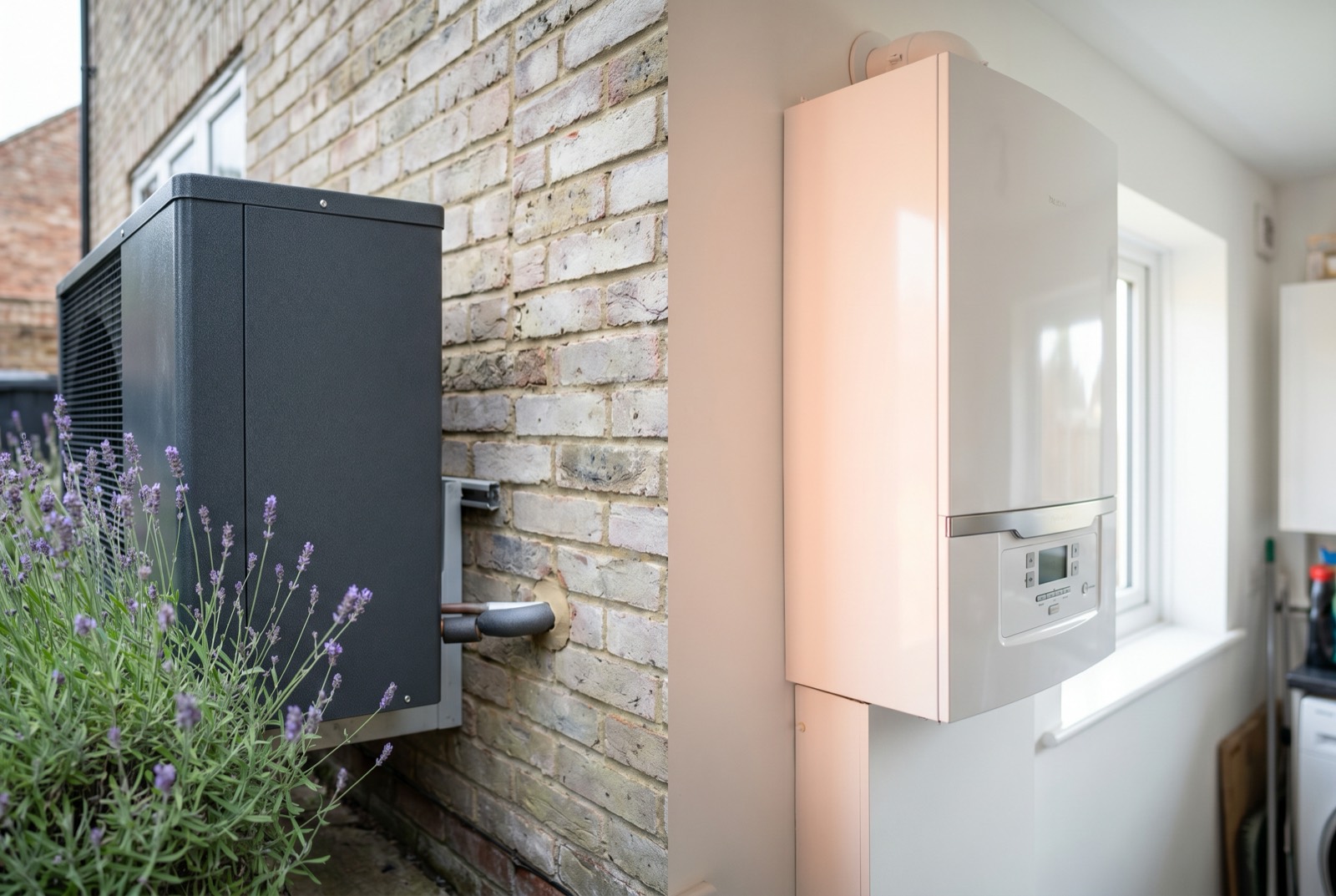
Up-front cost is only part of the picture; what you spend each year matters too. A heat pump is far more efficient than a gas or oil boiler — it moves heat rather than burning fuel — which is why a well-designed, well-installed system can keep running costs competitive. Whether you save money month to month depends on your electricity tariff, how efficient your old boiler was, your insulation, and how you use heating in your home.
Heat pumps suit specific tariffs well, and some homeowners pair them with a time-of-use electricity tariff to run the system more cheaply overnight. Because so much depends on your circumstances, treat any blanket savings claim with caution. A proper survey and system design is what gives you a realistic running-cost estimate for your own home, rather than a generic figure.
The single biggest factor in whether a heat pump runs cheaply and reliably is good system design — not the badge on the unit.
Renovation Register editorial team
Why a survey matters
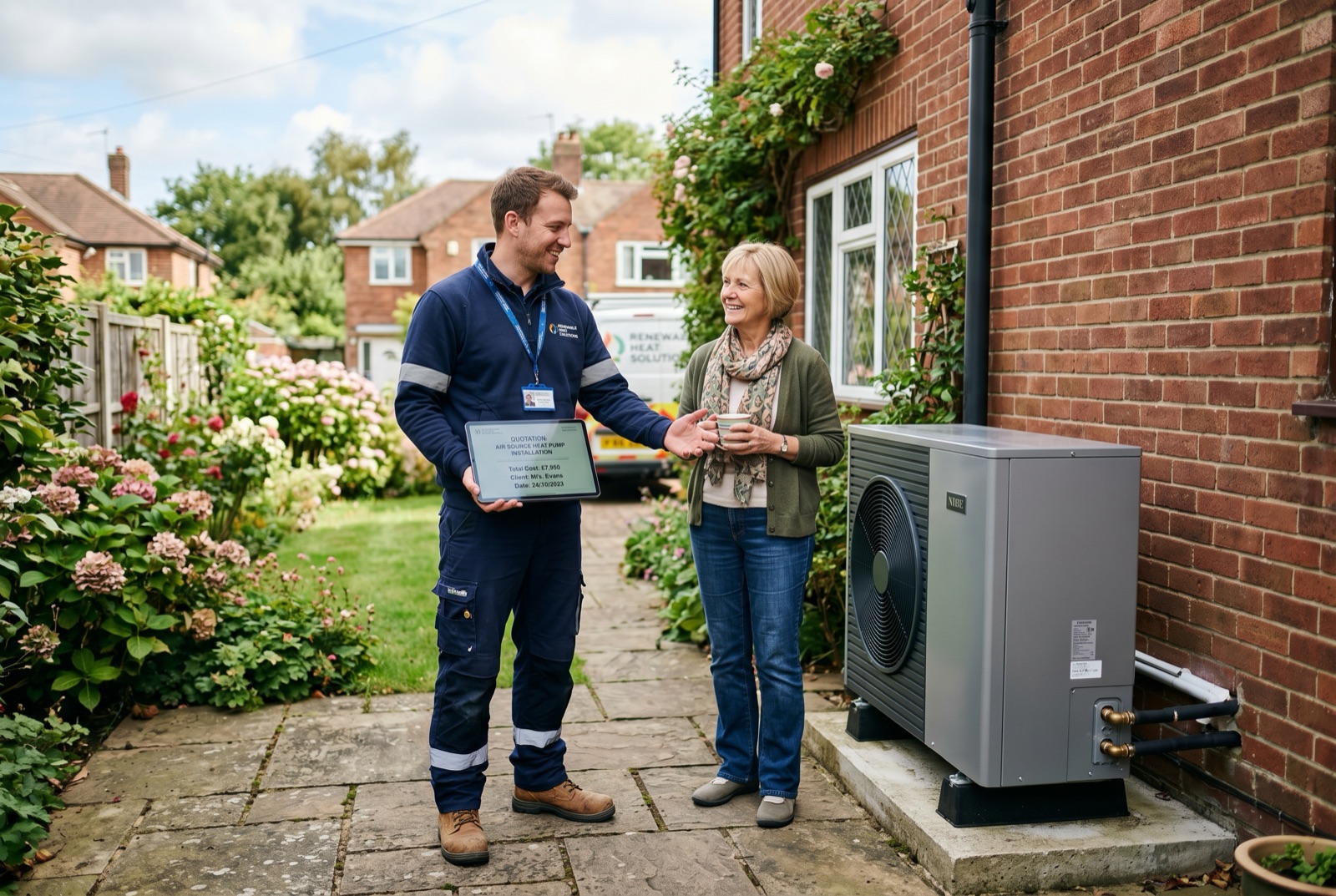
No reputable installer can give you a firm price from a phone call alone. A heat pump needs to be sized to your home's actual heat loss, and that requires someone to look at your insulation, your radiators, your hot water needs, and where the unit can sit. An undersized pump struggles in cold weather; an oversized one costs more than necessary and can run inefficiently. A survey turns a rough range into an accurate, tailored figure — and confirms whether your home is ready or needs a small amount of preparatory work first.
Getting an accurate figure for your home
The drivers here will help you make sense of any quote, but the only way to know your real cost is to have your home assessed by an MCS-certified installer — the certification you need to access both BUS and the Smart Export Guarantee, and one you can verify on the public register at mcscertified.com. Renovation Register offers a free project assessment worth £380, with no obligation: an MCS-certified installer visits, surveys your property, and gives you a written recommendation. It is the simplest way to turn an estimate into a precise, no-pressure figure for your home.
Related on Renovation Register