A hybrid heat pump sounds like the best of both worlds: the efficiency of a heat pump combined with the reassurance of a gas boiler on the coldest days. For many UK homes — particularly older, semi-detached and mid-terrace properties with modest insulation — that framing holds up. But hybrids also come with trade-offs that a full heat pump installation does not, and the financial picture changed noticeably when the government adjusted grant eligibility in 2024. This guide explains how the technology works, what it genuinely costs, and how to decide whether a hybrid or a full heat pump makes more sense for your situation.
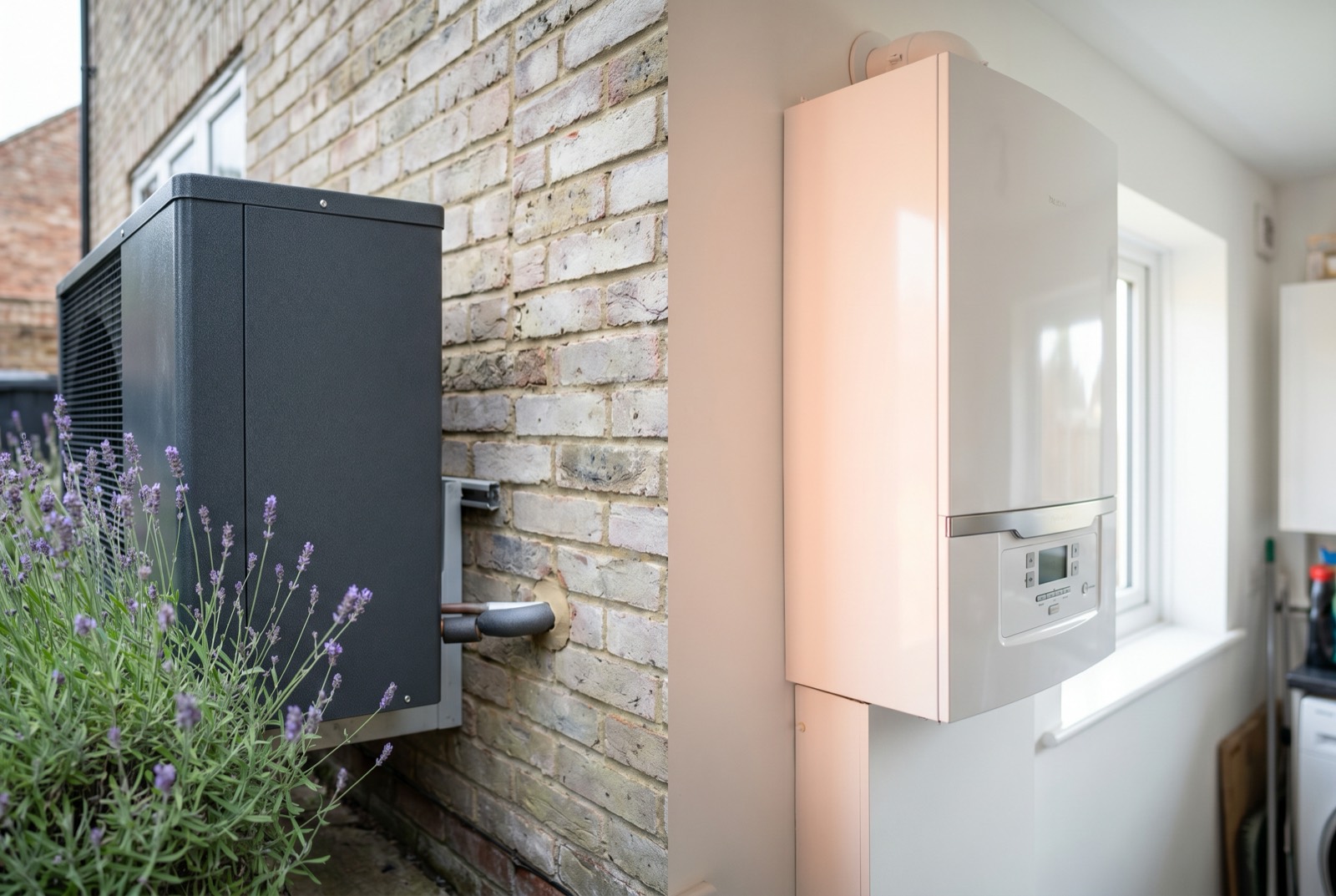
A hybrid system (also called a bivalent system) combines an air source heat pump with an existing or new gas boiler. The two units share the same heating circuit and hot water cylinder, but they do not run simultaneously. Instead, a controller — sometimes called a smart controller or bivalent controller — decides in real time which heat source to use based on the outdoor temperature and energy prices. When the outside air is mild (roughly above 0°C to 5°C depending on the system), the heat pump handles all the heating on its own, typically at a coefficient of performance (COP) of 2.5 to 4 or above. As temperatures drop and the heat pump becomes less efficient, the boiler takes over or supplements the heat pump's output. The result is a system that runs on electricity for the bulk of the heating season, while relying on gas only during the coldest weeks.
Modern hybrid systems use a bivalent point — a threshold temperature at which the controller switches from heat pump to boiler priority. Some systems allow you to set this threshold manually; others use live electricity and gas tariff data to make a cost-optimised decision rather than a purely temperature-based one. This second approach, sometimes marketed as tariff-based or smart-optimised control, can be particularly effective if you are on a time-of-use electricity tariff where overnight rates are low. The heat pump charges a buffer tank or hot water cylinder during cheap-rate hours, reducing how often the boiler fires at all. A competent MCS-certified installer should configure this logic for your specific tariff and home before commissioning the system.
Both approaches reduce carbon emissions compared to a standalone gas boiler, but they involve different compromises on cost, complexity, and long-term running costs.
- Upfront cost: Hybrid systems typically cost less to install than a full heat pump replacement because radiators, pipework and the hot water cylinder may not need upgrading. A full heat pump installation in a home that needs radiator upgrades costs more, with the extent of those upgrades the main driver of the figure.
- Running costs: A full heat pump, in a well-insulated home, will generally have lower annual running costs than a hybrid, because it never uses gas. Hybrids still incur gas standing charges and consume gas during cold spells.
- Carbon footprint: Full heat pumps produce lower direct carbon emissions, especially as the electricity grid becomes greener. Hybrids still burn gas, so they are not a zero-carbon solution.
- Suitability for older homes: Hybrids are often more practical in solid-wall or poorly insulated properties where a full heat pump would require extensive (and expensive) fabric upgrades first.
- Future-proofing: If gas networks are decarbonised or gas prices rise significantly, a hybrid system may need retrofitting again. A full heat pump eliminates that dependency today.
- Complexity and maintenance: Two heating units mean two sets of annual servicing requirements and two potential failure points. Installers with experience in hybrid commissioning are important to seek out.
Hybrids tend to suit homes where a full heat pump would struggle to meet the heating load without significant additional investment. Indicators that a hybrid may be the more practical first step include: an EPC rating of D or below, solid-wall construction without external insulation, radiators sized for a high-flow temperature boiler (typically above 55°C), or an older hot water cylinder that would need replacing for a full system. Conversely, if your home already has cavity wall insulation, loft insulation, and reasonably sized radiators, a full heat pump is worth costing properly before defaulting to a hybrid. An independent survey by an MCS-certified installer is the most reliable way to find out which approach fits your specific property.
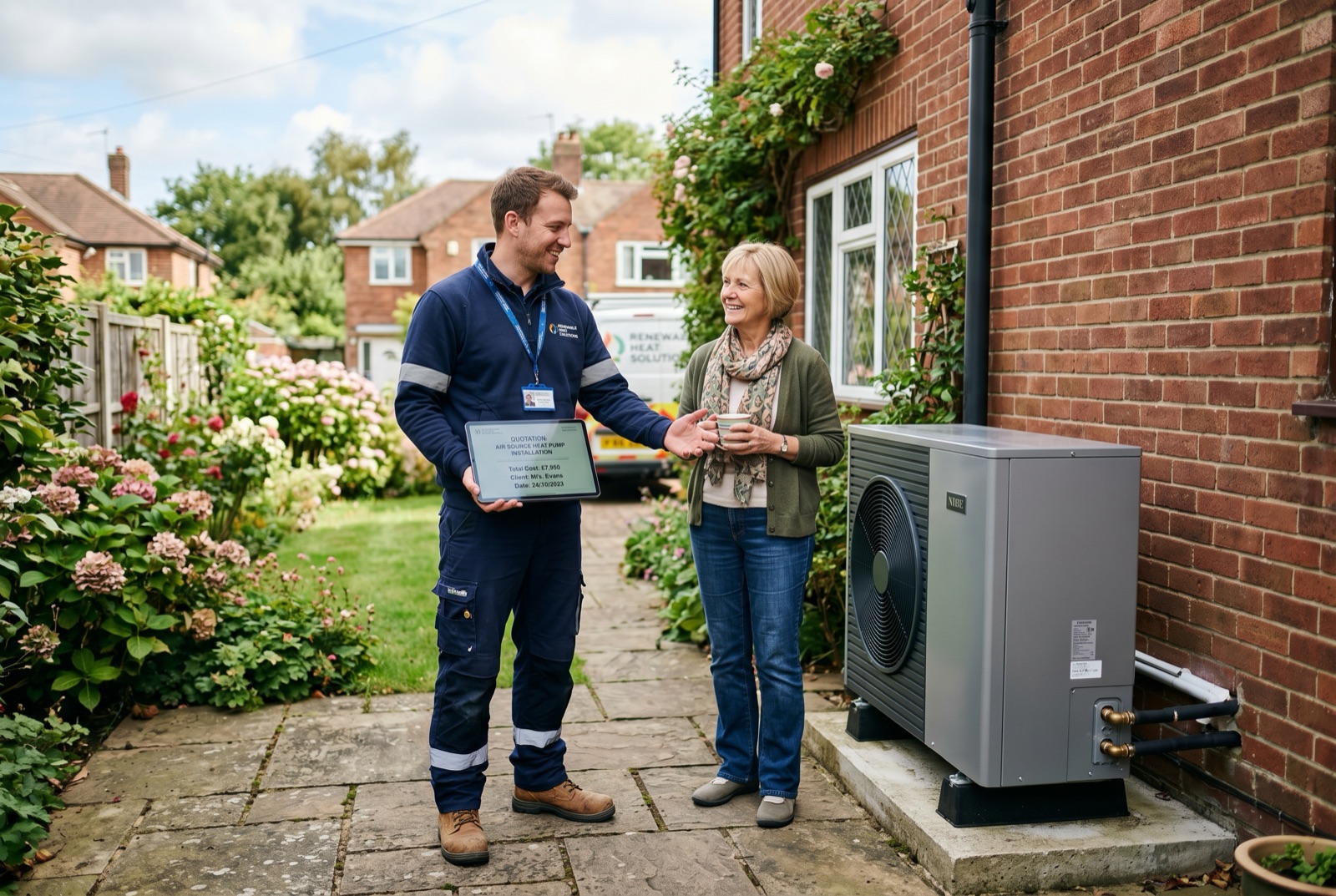
Installed costs for a hybrid system vary considerably depending on whether you are retaining an existing boiler or fitting a new one alongside the heat pump unit, so the price is only firm once an installer has surveyed your setup. If the existing boiler is ageing or incompatible, adding a new condensing boiler pushes costs higher. Running costs depend heavily on your insulation, the bivalent point setting, and your electricity and gas tariffs; a professional heat loss calculation is the only reliable basis for estimating annual bills.
Heat pumps — including hybrid systems — qualify for 0% VAT on both products and installation labour when supplied to a domestic property in Great Britain. This applies regardless of BUS eligibility and represents a meaningful saving on the total installed cost. Homeowners in Scotland may also be able to access Home Energy Scotland grants and interest-free loans for qualifying heat pump installations, which can be combined with or used instead of the BUS depending on circumstances. In Wales, the Nest scheme covers some households in fuel poverty. It is worth checking all available schemes before committing, as combining support mechanisms — where permitted — can significantly reduce the net cost.
Before accepting any quote for a hybrid or full heat pump, these are the questions that will give you the clearest picture of whether the proposal is sound.
- Has a full heat loss calculation been carried out for each room, not just the property as a whole?
- What flow temperature does the system need to meet the heat load, and is that within the heat pump's optimal range?
- At what outdoor temperature is the bivalent point set, and can it be adjusted after installation?
- Is the quote based on retaining my existing radiators, or will any need upsizing — and if so, which rooms?
- Does this installation qualify for the Boiler Upgrade Scheme, and will you handle the grant application?
- What annual servicing is required for the heat pump unit and the boiler separately?
- What MCS certificate number covers this installation, and will I receive a copy of the MCS certificate on completion?
A hybrid heat pump can be a sensible, well-evidenced step toward lower carbon heating for homes that are not yet ready — structurally or financially — for a full electrification. The technology is mature, the grant landscape is improving, and the running cost advantages over a standalone boiler are real. The key is getting an honest assessment of your specific property rather than a one-size solution. A free survey with an MCS-certified heat pump installer will tell you far more than any online calculator, and it costs you nothing to find out where you stand.