Heat pumps are now the leading low-carbon alternative to gas boilers in the UK, and two technologies dominate the market: air source heat pumps (ASHPs) and ground source heat pumps (GSHPs). Both work by moving heat rather than burning fuel, achieving efficiencies that no conventional boiler can match. However, they differ significantly in how they are installed, what they cost, and which properties they suit best. This guide sets out the key differences plainly, so you can go into any conversation with an installer already knowing the right questions to ask.
An air source heat pump extracts heat from the outdoor air — even when temperatures fall below freezing — and uses a refrigerant cycle to upgrade that heat to a useful temperature for your radiators or underfloor heating. A ground source heat pump works on the same principle, but the heat source is the ground itself, accessed via a network of pipes buried either horizontally in trenches or vertically in boreholes. Because the ground temperature at depth (typically around 8–12°C in the UK) remains more stable than air temperature throughout the year, a GSHP has a more consistent heat source to draw from. Both systems can also provide domestic hot water.
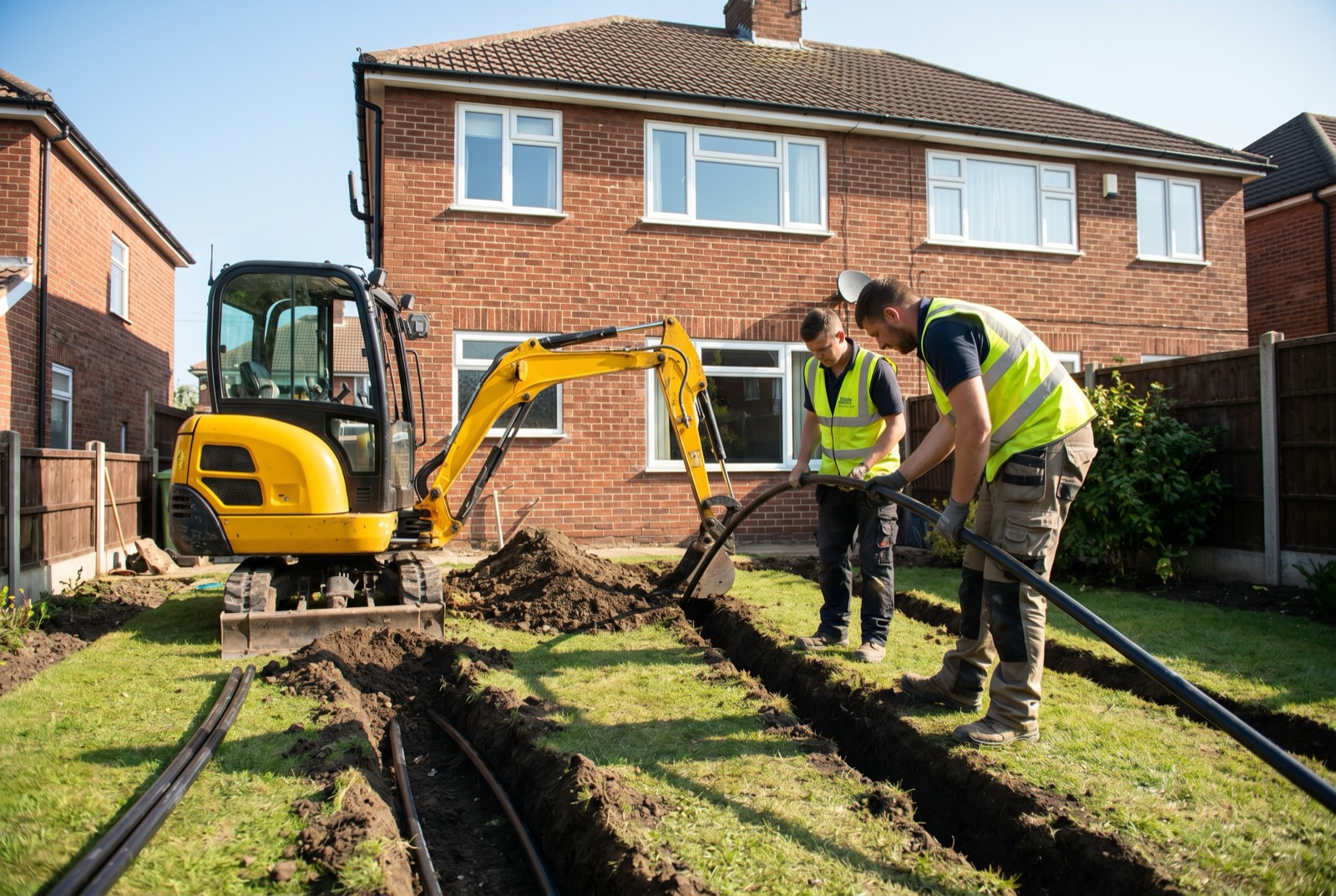
Installation cost is the most significant practical difference between the two technologies. Air source heat pumps are substantially cheaper to install because no groundwork is required beyond positioning the external unit and connecting it to your heating system. Ground source systems require either excavating a large area of garden for horizontal ground loops, or drilling boreholes that can reach 100 metres or more in depth, which adds considerable cost.
- Air source heat pump (supply and install): the cheapest of the three to fit, as no groundwork is needed
- Ground source heat pump with horizontal ground loop: more expensive than air source, as it needs a large area of garden excavated
- Ground source heat pump with vertical boreholes: the most expensive option, driven by the depth and number of boreholes
- Boiler Upgrade Scheme grant (England and Wales): up to £7,500 off either type, applied by your MCS-certified installer on your behalf
- VAT: 0% on qualifying heat pump installations under current UK rules
Efficiency in heat pump terms is expressed as the Coefficient of Performance (COP) — the ratio of heat output to electrical energy consumed. A COP of 3.0 means 3 units of heat for every 1 unit of electricity used. Ground source heat pumps tend to achieve higher average COPs than air source models because the ground temperature is more stable and, in winter, warmer than outside air. In practice, a well-installed GSHP operating against a correctly sized heating system might achieve a seasonal COP in the range of 3.5–4.5. A good ASHP installation, in a well-insulated home with low-temperature emitters, typically achieves a seasonal COP of around 2.5–3.5. Both figures represent a large improvement over even the most efficient gas boiler.
It is worth noting that the efficiency advantage of a GSHP narrows considerably if the installation is poorly designed. Neither technology delivers its potential without correct sizing, appropriate emitters (underfloor heating or large radiators), and a well-insulated building envelope. The quality of the installation and the condition of the home matter at least as much as which type of heat pump you choose.
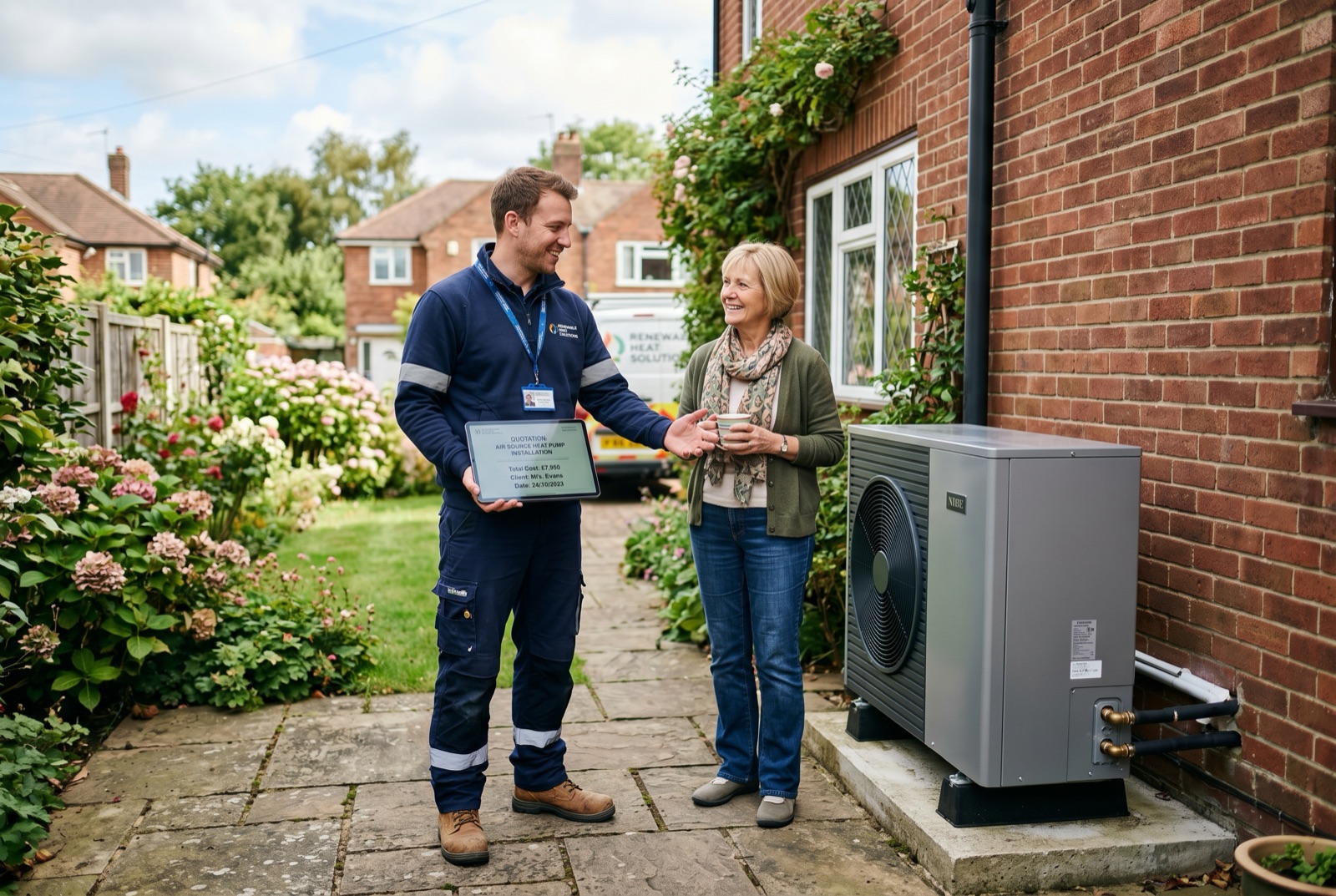
Air source heat pumps require relatively little space. The external unit — broadly similar in size to a large air conditioning unit — needs a clear wall or ground position with adequate airflow and reasonable clearance from boundaries. Internally, the system requires a hot water cylinder and, in some cases, a small buffer tank. Most average-sized homes can accommodate an ASHP without difficulty.
- ASHP external unit: typically 0.5–1.5 m wide, 0.8–1.5 m tall; must be accessible for maintenance
- Horizontal ground loop: requires a trench area roughly 1.5–2 times the floor area of the property — often 200–600 sq m of usable garden
- Vertical borehole: a much smaller surface footprint (one or more borehole heads, perhaps 0.5 m across each), but requires access for a drilling rig during installation
- Both types require a suitably sized plant room or utility space indoors for the heat pump unit, hot water cylinder, and controls
Noise is a common concern, particularly for households with close neighbours. Air source heat pumps produce some noise from the outdoor fan — modern units typically operate in the range of 40–55 dB(A) at one metre, which is broadly comparable to a quiet conversation or a refrigerator hum. Ground source heat pumps are largely silent in operation: the ground loop itself produces no noise, and the internal heat pump unit runs quietly indoors. Permitted development rules in England set specific noise limits for ASHP installations, and a reputable, MCS-certified installer will assess noise impact as part of the site survey. A GSHP is the better choice where noise is a genuine constraint — for example, a property directly adjoining a neighbour's bedroom wall.
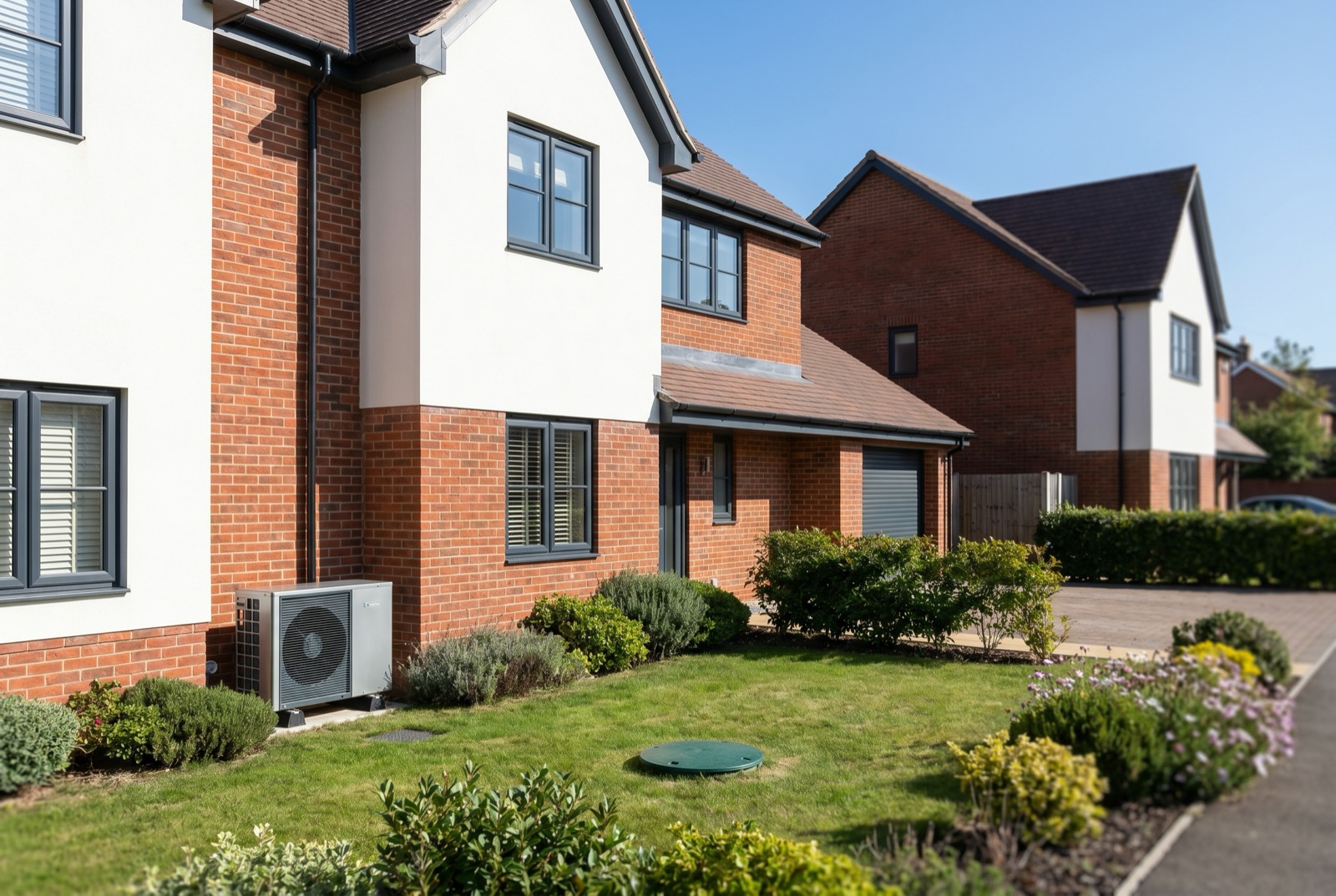
Air source heat pumps suit a wider range of properties precisely because they have fewer site requirements. They work in urban and suburban settings, require no large garden, and can often be installed within a day or two once the design is confirmed. Ground source heat pumps are typically most cost-effective for rural or semi-rural properties with sufficient outdoor land, or for larger homes where the efficiency advantage over many years justifies the higher upfront investment. New-build developments sometimes specify GSHPs from the outset because groundwork can be integrated efficiently into the build programme.
- Terraced or semi-detached home with a small garden: air source is usually the only practical option
- Detached property with half an acre or more: horizontal ground loop may be viable
- Listed building or conservation area: both are possible, but permitted development rights may not apply — check with your local planning authority
- Off-gas-grid rural property: both technologies work well; the high efficiency of a GSHP may offset its cost over time given typical oil or LPG prices
- New build: either type is suitable; the developer's choice often depends on plot layout and budget
Whichever heat pump you choose, the performance of your home's fabric is critical. Heat pumps work at lower flow temperatures than conventional boilers — typically 35–55°C rather than 70–80°C — and deliver their best efficiency when a well-insulated home retains heat effectively. If your property has significant heat loss through uninsulated walls, a poor roof, or draughty windows, improving insulation before or alongside a heat pump installation will reduce the size (and cost) of system required and lower your running bills. An honest installer should assess your home's current insulation levels as part of the design process.
Whether you proceed with an air source or ground source system, MCS certification is the single most important credential to check. MCS (Microgeneration Certification Scheme) is the UK industry standard for heat pump installation quality. Only an MCS-certified installer can apply for the Boiler Upgrade Scheme grant on your behalf — so without it, you cannot access up to £7,500 of government support. MCS certification also means the installer has met defined competency standards and their work is backed by a complaints and warranty framework. A free, no-obligation home assessment is the right starting point: a qualified surveyor will assess your heat loss, recommend the appropriate system type, and produce a design that accounts for your property's specific conditions.
If you are ready to explore which heat pump technology is the right fit for your home, the next step is to speak with a qualified, MCS-certified installer in your area. A free site assessment carries no obligation and will give you a clear picture of realistic costs, expected savings, and the grants you are entitled to claim.