When a gas boiler finally gives up, most households face the same question: replace like-for-like, or make the jump to a heat pump? The honest answer is that neither system wins on every measure for every home. Running costs, carbon impact, comfort, and longevity each tell a slightly different story — and the right choice depends on your property, your tariff, and how long you plan to stay put. This article sets out what the evidence actually shows, without the hype in either direction.
The single most common question is whether a heat pump is cheaper to run than a gas boiler. At current UK energy prices, the picture is more nuanced than either camp tends to admit. Gas is priced per unit at roughly a third of the cost of electricity — so even though a heat pump delivers two to four units of heat for every unit of electricity it consumes (its Coefficient of Performance, or CoP), that efficiency advantage can be partially or fully eroded by the electricity-to-gas price ratio.
A well-installed air source heat pump achieving a seasonal CoP of around 3.0 in a reasonably insulated home might deliver running costs broadly comparable to a modern condensing gas boiler, or modestly lower — but the gap is sensitive to your specific tariff. Households on an economy tariff, a time-of-use EV tariff, or with solar PV on the roof will see a more favourable picture. Those on a standard variable rate paying a premium for electricity will see a narrower or even negative saving at today's prices. Always obtain a heat loss calculation and realistic seasonal CoP estimate for your specific property before drawing conclusions.
- Insulation quality: a heat pump working against a poorly insulated envelope runs harder and loses its efficiency advantage quickly. Loft and wall insulation are often worth addressing before or alongside installation.
- Flow temperature: heat pumps operate most efficiently at lower flow temperatures (typically 35–45°C) paired with larger radiators or underfloor heating. Older systems designed for 70°C boiler flow temperatures may need upgrades.
- Electricity tariff: specialist heat pump tariffs and time-of-use rates can meaningfully reduce the cost per unit of electricity used overnight or off-peak.
- System sizing: an undersized heat pump will struggle in cold weather; an oversized one will short-cycle and perform inefficiently. Proper MCS-compliant design, including a full heat loss survey, is essential.
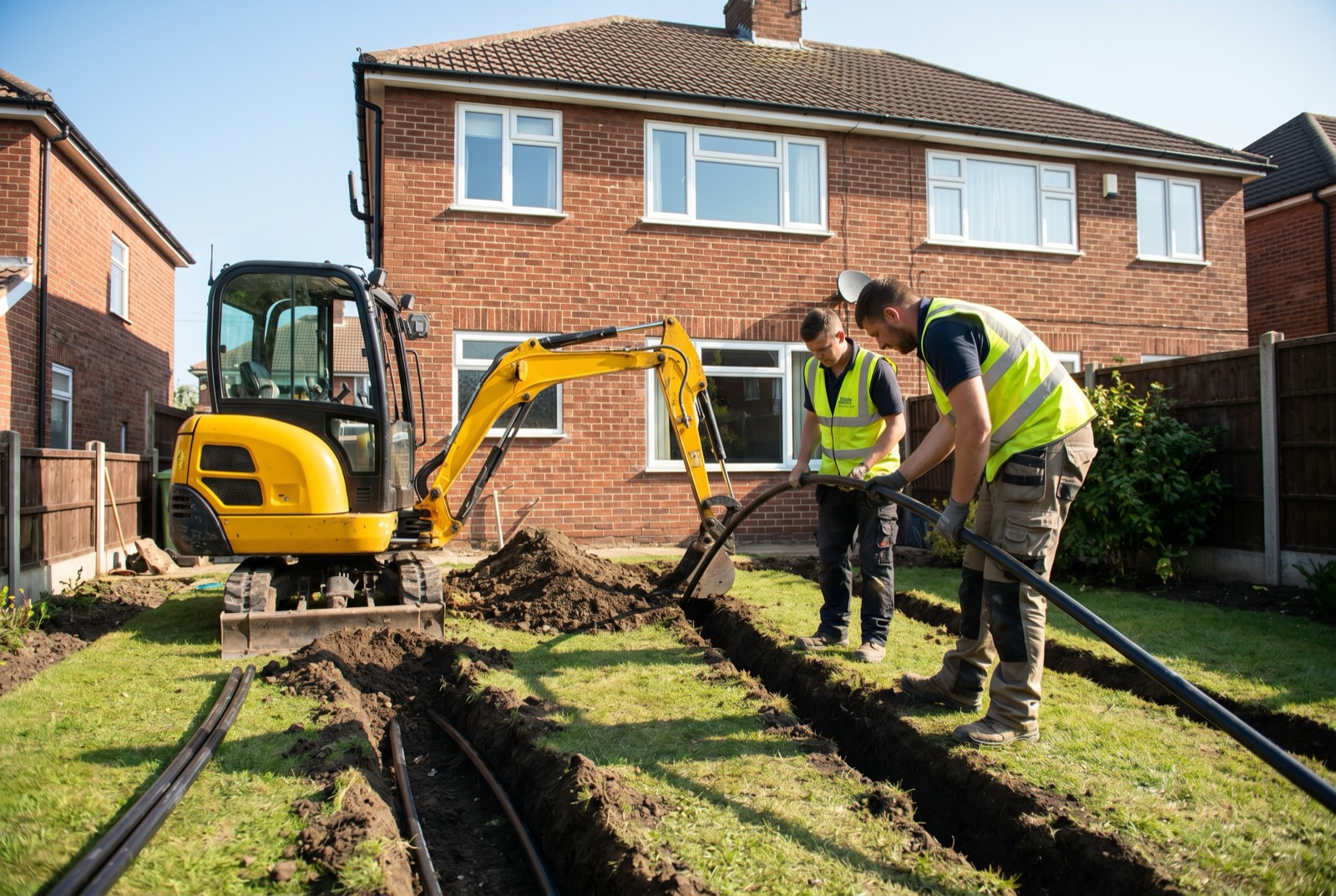
- Ground source versus air source: ground source heat pumps typically achieve higher CoPs because the ground stays at a more stable temperature than winter air, but installation costs are significantly higher.
This is where heat pumps have a clearer and more durable advantage. The carbon intensity of the UK grid has fallen substantially over the past decade and continues to fall as renewable generation expands. Because a heat pump multiplies each unit of electricity into multiple units of heat, it already produces significantly fewer carbon emissions per unit of heat delivered than a gas boiler — and that advantage will grow over time as the grid gets greener. A gas boiler, by contrast, is locked into burning a fossil fuel at roughly 85–93% efficiency with no pathway to improvement.
For households with a strong interest in reducing their home's carbon footprint, this trajectory matters: a heat pump installed today may produce half the lifecycle carbon of a gas boiler installed at the same time, with the margin widening through its operational life as the grid decarbonises further.
A well-designed heat pump system delivers a different kind of warmth than a gas boiler: lower-temperature heat delivered more consistently, rather than higher-temperature bursts on a thermostat call. Many households report that this feels more comfortable — rooms stay at a steadier temperature rather than cycling between warm and slightly cool. Underfloor heating is the natural partner for heat pumps, and homes with UFH often find the transition the most seamless. Homes with conventional radiators may require some radiator upgrades to maintain the same level of comfort at lower flow temperatures, though modern heat pump radiators are designed to compensate.
Hot water production is one area where heat pumps need more thought. A gas boiler can reheat a cylinder quickly on demand; a heat pump works more slowly at lower temperatures. Properly sized hot water cylinders — and, where needed, immersion heater backup for peak demand — are a standard part of a well-specified installation. Legionella compliance (a periodic high-temperature cylinder cycle) is also factored into any correctly commissioned MCS installation.
- Gas boilers typically last 10–15 years with annual servicing. Parts are widely available and most Gas Safe engineers can service or repair them.
- Air source heat pumps are generally rated for 15–20 years, with some manufacturers citing longer warranties on their compressors. Fewer moving parts than a boiler means less to go wrong.
- Ground source heat pumps share the same indoor components as air source, but the ground loop is expected to last 50+ years, making it a longer-term infrastructure investment.
- Annual servicing applies to both technologies. Heat pump servicing costs are broadly similar to boiler servicing, though the pool of qualified engineers is currently smaller — an argument for choosing an installer with a clear aftercare offer.
- Refrigerant regulations are evolving. Heat pumps use refrigerants (typically R32 or R410A) subject to F-Gas rules; any handling must be carried out by F-Gas certified engineers, which reputable MCS installers will already be.
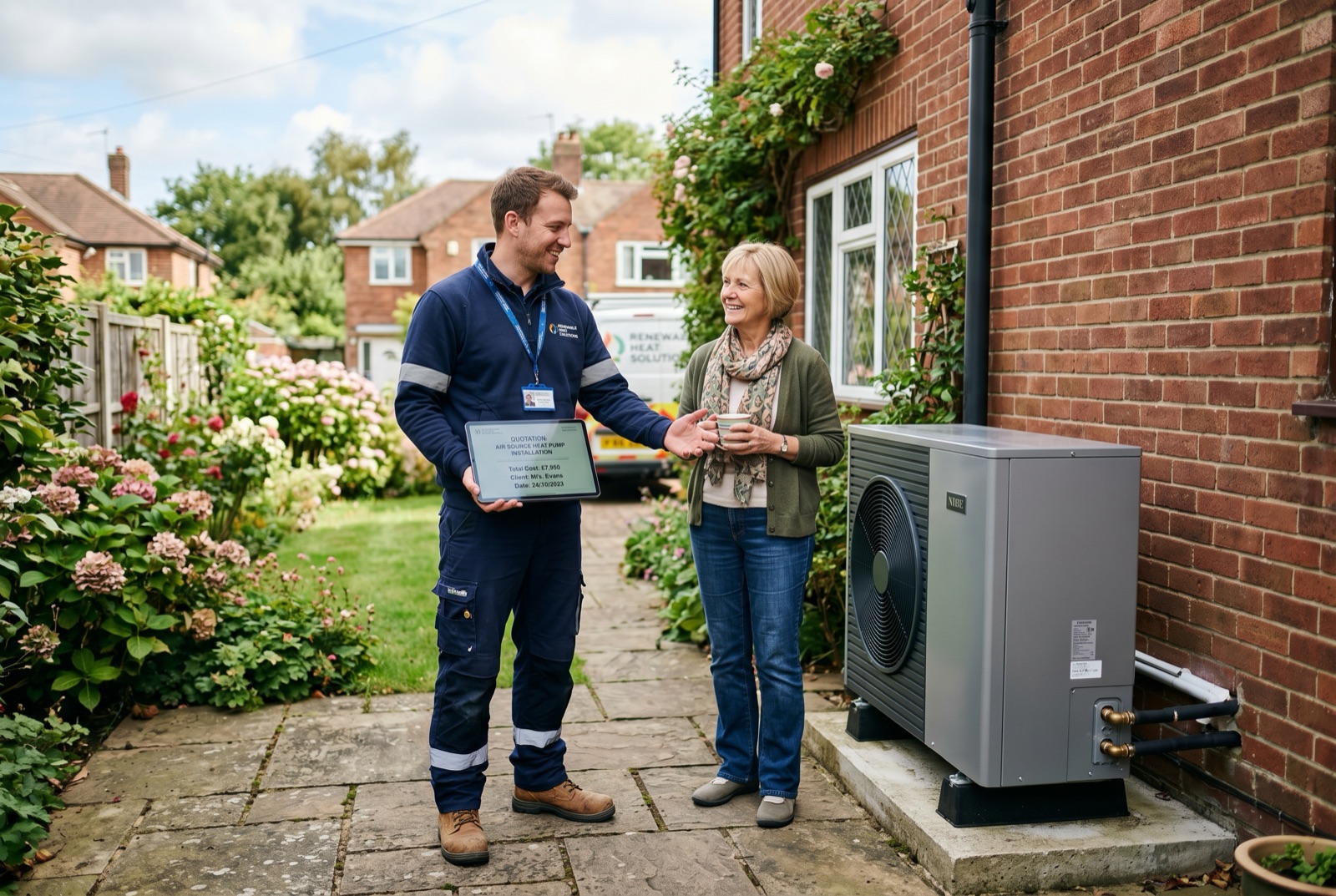
The upfront cost of a heat pump installation is higher than a boiler replacement, with ground source costing more than air source because of the groundworks, and the exact figure depending on property size and ground conditions. The Boiler Upgrade Scheme (BUS) currently offers a grant of up to £7,500 toward an air or ground source heat pump in England and Wales, applied directly at point of sale by your MCS-certified installer — meaning you pay the net price and do not need to claim anything yourself. In Scotland, the Home Energy Scotland grant and loan scheme offers additional support. All qualifying heat pump installations currently benefit from 0% VAT on both equipment and installation.
Payback periods on the additional upfront cost vary widely depending on running cost savings and the grants received. For homes well-suited to heat pumps — good insulation, lower-temperature heating systems, access to a competitive electricity tariff — payback within 7–12 years is plausible on current figures, with the gap likely to narrow further if gas prices rise or electricity prices fall relative to one another.
Heat pumps perform best in homes that are reasonably well insulated, have space for a hot water cylinder, and can accommodate larger heat emitters or underfloor heating. Older, solid-wall properties with no insulation improvements and existing small radiators are harder cases — not impossible, but requiring more upfront remediation. Homes in rural areas currently off the gas grid are among the strongest candidates: they are typically comparing heat pumps against oil or LPG rather than mains gas, where the economics shift considerably in the heat pump's favour. A professional heat loss calculation — which MCS-certified installers are required to carry out as part of a compliant design — is the only reliable way to assess suitability for your specific property.
- If your boiler has failed and your home is uninsulated: consider a low-cost boiler replacement alongside an insulation programme now, with a planned heat pump transition in 5–10 years once the fabric is improved.
- If your boiler is ageing but not failed: this is the ideal window to assess heat pump suitability without time pressure. Get a heat loss survey and like-for-like cost comparison.
- If you are off-grid (oil or LPG): heat pump running costs are very likely to be lower. The Boiler Upgrade Scheme is available for oil-heated homes switching to heat pumps.
- If you have or are planning solar PV: the combination of solar and a heat pump is particularly effective, with daytime solar generation offsetting heat pump electricity consumption and further improving running costs.
- If carbon reduction is your primary goal: a heat pump is the clearest path, regardless of the current running cost comparison.
The best starting point is an honest, no-obligation assessment from a qualified installer who can survey your home, model realistic running costs based on your actual consumption, and explain which grants you qualify for. Look for installers who hold MCS certification — this is the industry standard that underpins eligibility for the Boiler Upgrade Scheme and demonstrates that the design, installation, and commissioning meet recognised quality benchmarks. You can search for MCS-certified heat pump installers local to you through the Renovation Register directory.