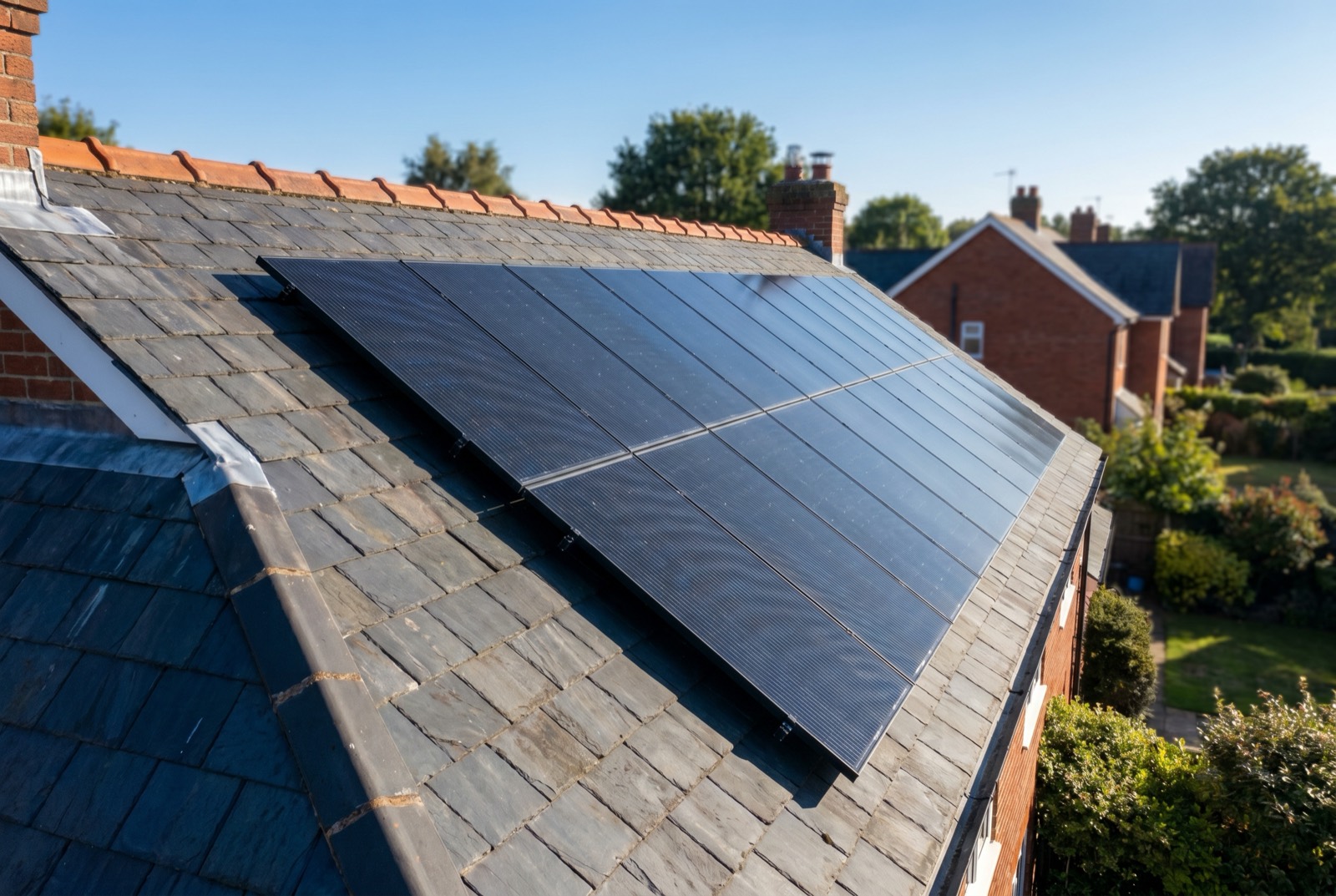
One of the first questions homeowners ask when exploring solar is simple enough: how many panels do I actually need? The honest answer depends on three things — how much electricity your household uses, how much usable roof space you have, and how much of your own generation you want to use versus export. Get those three inputs right, and the rest of the calculation follows straightforwardly.
Your electricity bills are the most reliable starting point. The average UK household uses roughly 2,700–3,100 kWh per year according to Ofgem, though this varies considerably. A two-person flat might use 1,800 kWh; a family of four with an electric car or a heat pump could easily reach 5,000–7,000 kWh. Find your actual annual consumption figure — it appears on your bill or via your smart meter — before doing any sizing.
If you have recently added or plan to add a high-consumption device such as an air source heat pump or an electric vehicle charger, include that projected demand in your baseline. Sizing a system against today's usage only to find it undersized in two years is a common and avoidable mistake.
Solar systems are sized in kilowatt-peak (kWp), which represents the maximum output of the array under standard test conditions. In the UK, a 1 kWp system typically generates around 800–1,000 kWh per year depending on location, orientation, and shading — broadly 850 kWh is a reasonable working figure for central England, slightly less in Scotland, slightly more in the south-west. Dividing your annual consumption by that yield figure gives you a rough target system size in kWp.
- Annual usage 2,700 kWh — a system of roughly 3–4 kWp would cover a large share of demand
- Annual usage 4,000 kWh — target 4–5 kWp, especially if you can shift loads to daytime
- Annual usage 6,000+ kWh (heat pump or EV household) — 6–10 kWp systems become viable if roof space allows
- Location matters: a south-facing roof in Cornwall outperforms the same array in Aberdeen by around 15–20%
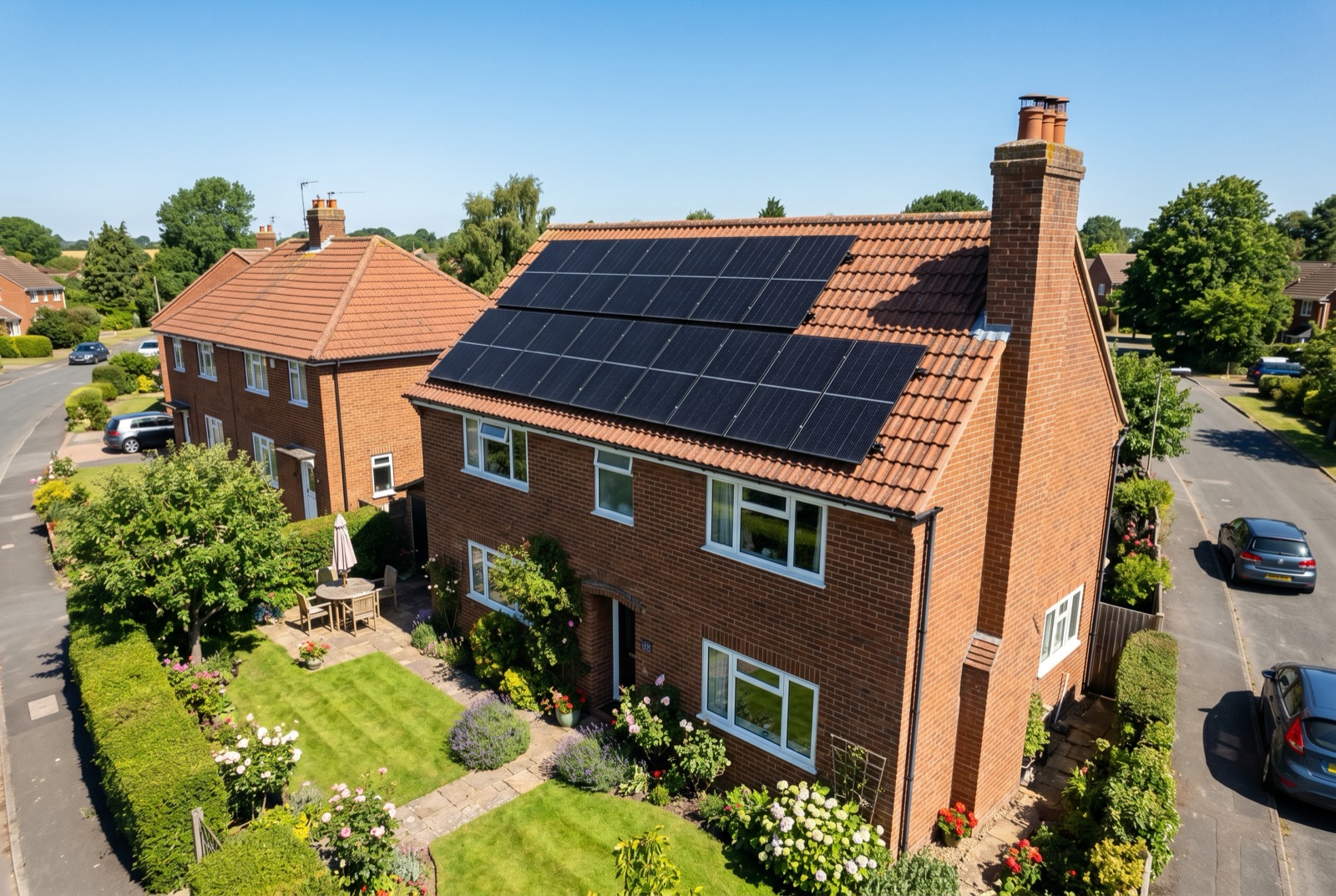
Most modern residential solar panels are rated between 380 W and 430 W peak. A 4 kWp system therefore requires roughly 10–11 panels at 380 W, or 9–10 panels at 420 W. Each panel occupies approximately 1.7–2.0 m² of roof surface. A 4 kWp system needs around 18–22 m² of unshaded, suitably oriented roof area — manageable on most semi-detached or detached properties.
Panel count is ultimately a secondary figure. Two installers quoting different numbers of panels can produce the same kWp output if the panel wattage differs. Always compare proposals in kWp, not panel count alone.
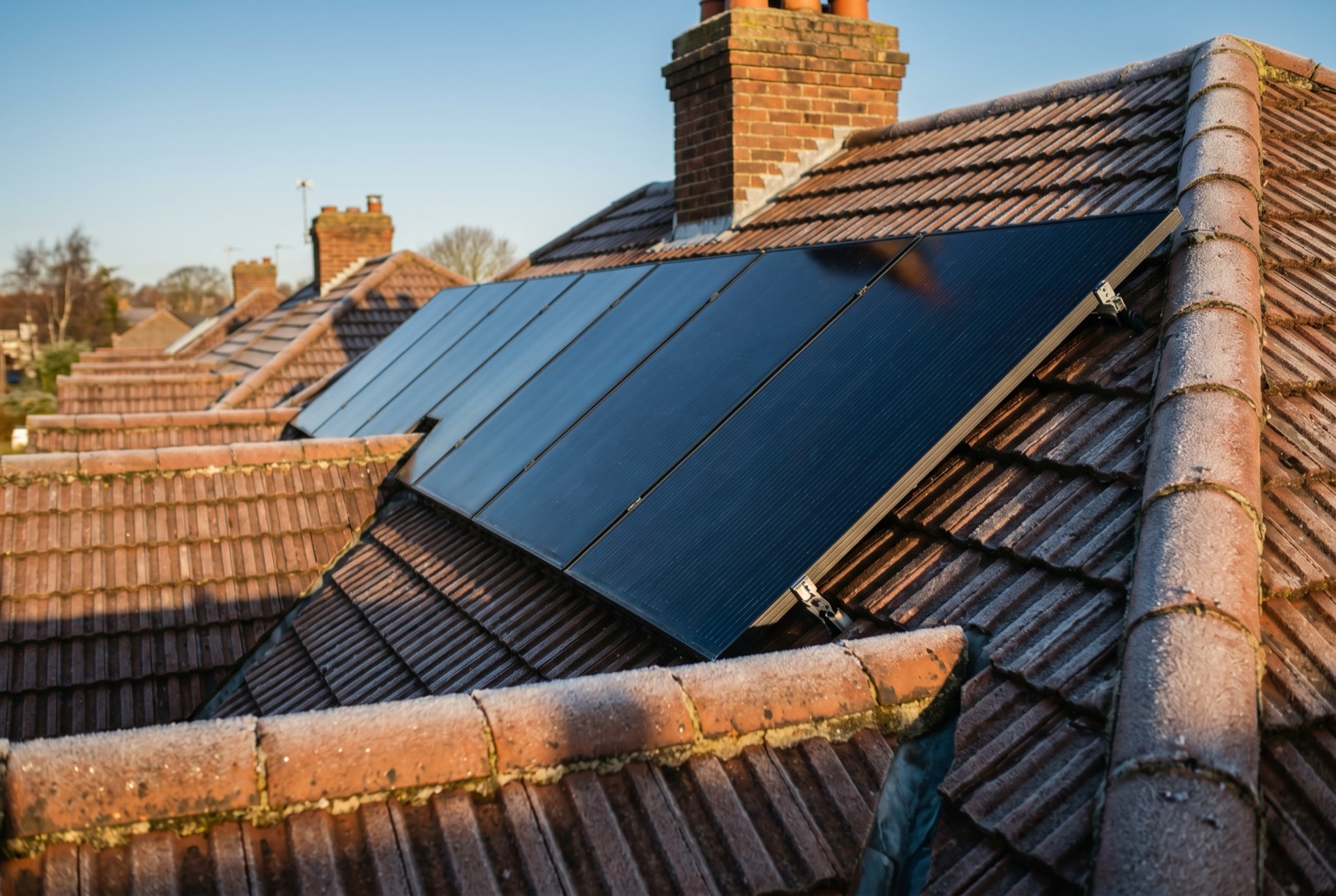
A south-facing roof at a pitch of 30–40 degrees captures the most solar energy in the UK. East or west-facing roofs are viable — typically delivering around 80–85% of the output of an equivalent south-facing installation — and can in fact spread generation more evenly across the day, which pairs well with battery storage. North-facing roofs are generally not suitable for solar PV.
- Chimneys, dormers, skylights, and neighbouring trees all cause shading — even partial shading can significantly reduce output without microinverters or power optimisers
- A structural survey may be required on older properties to confirm the roof can carry the additional load
- Planning permission is not usually required for most domestic solar PV installations in England, Scotland, and Wales under permitted development rights, though conservation area restrictions apply
- Listed buildings require separate consent regardless of location
Installed costs for a domestic solar PV system in the UK rise with system size — a larger 6–10 kWp installation costs more than a 3–4 kWp one — and also vary by installer, region, and specification, so a quote is only firm once your roof has been surveyed. Solar PV and associated equipment currently benefits from 0% VAT for eligible residential installations, which reduces the upfront cost compared to earlier years.
The Smart Export Guarantee (SEG) requires licensed energy suppliers to pay you for surplus electricity exported to the grid. Rates are set by individual suppliers and are not fixed by government, so it is worth shopping around for a competitive SEG tariff once your system is commissioned. Export earnings help offset the cost of generation you cannot self-consume.
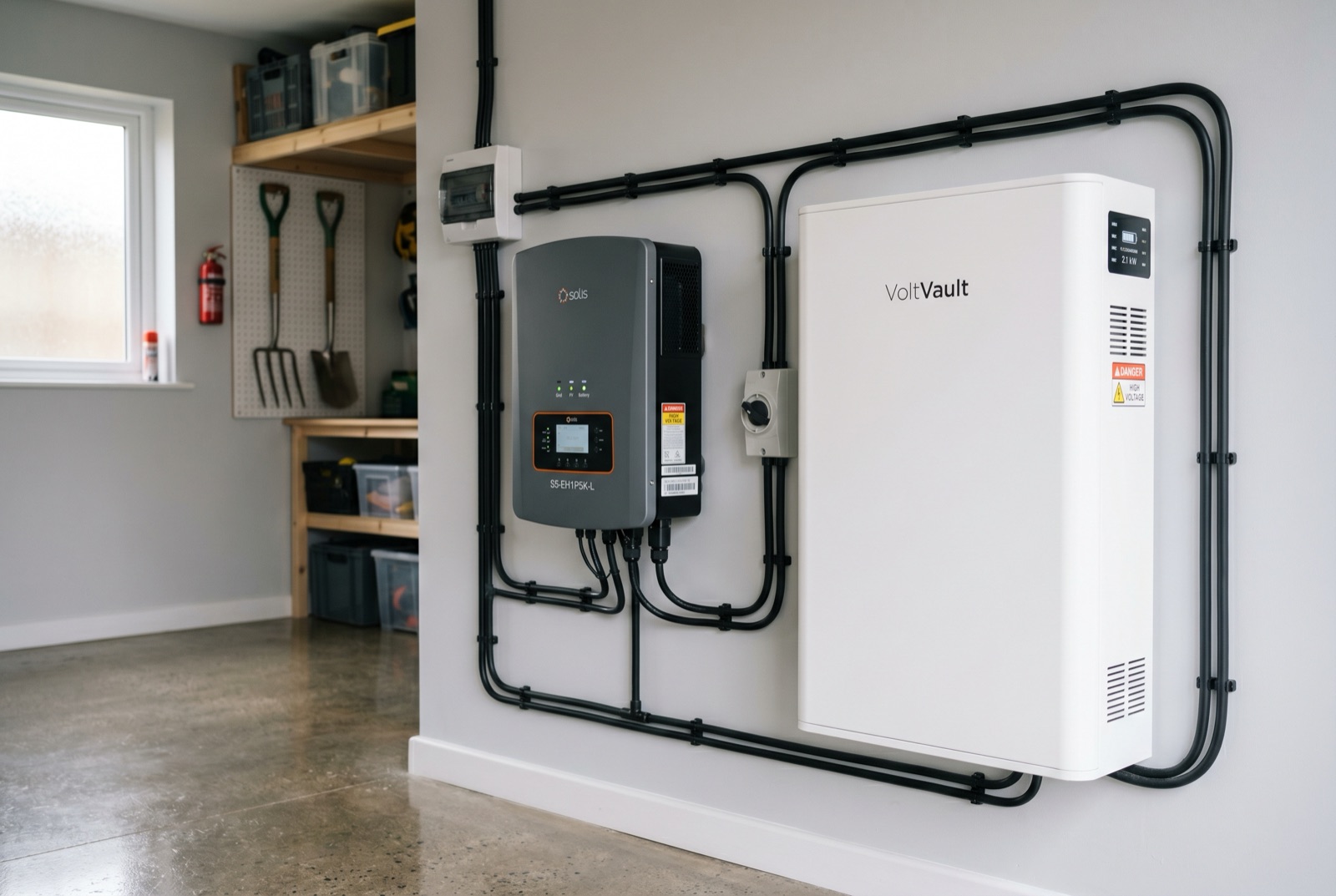
Solar panels generate most of their output between roughly 9 am and 4 pm, which does not always align with peak household demand in the morning and evening. A home battery — typically 5–15 kWh capacity for a domestic property — stores excess daytime generation for use later. This raises self-consumption from roughly 30–40% (without storage) to 60–80% for many households, materially reducing what you draw from the grid.
Battery storage adds to the system cost, with capacity and chemistry the main drivers. It is most cost-effective when your daytime consumption is low relative to generation, or when you are on a time-of-use tariff that makes off-peak grid charging viable as a backup strategy. An MCS-certified installer can model self-consumption scenarios specific to your usage profile before you commit.
Online calculators and ballpark figures are a useful starting point, but they cannot account for your specific roof geometry, local shading, consumption patterns, or the interaction with other technologies in your home. An MCS-certified solar installer will carry out a full site assessment — checking orientation, roof condition, shading analysis, and existing electrical setup — before producing a system specification and realistic generation estimate. MCS certification is also a requirement for accessing the Smart Export Guarantee, so it is worth confirming certification status before signing any contract.
Use our directory to find MCS-certified solar PV installers in your area. A free home assessment costs you nothing and gives you an accurate picture of what solar could realistically deliver for your household — and whether adding battery storage from the outset makes financial sense for your situation.
Related on Renovation Register