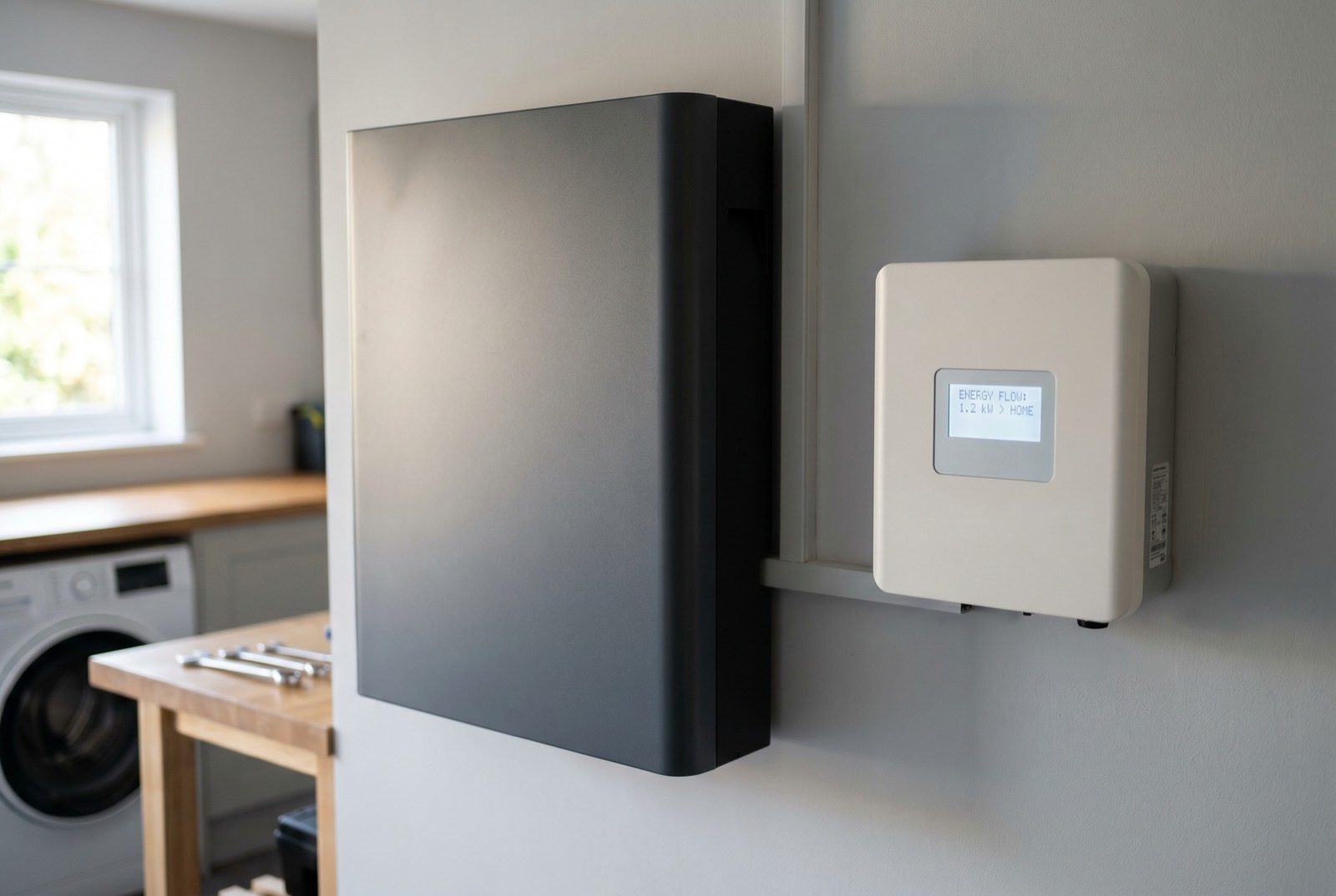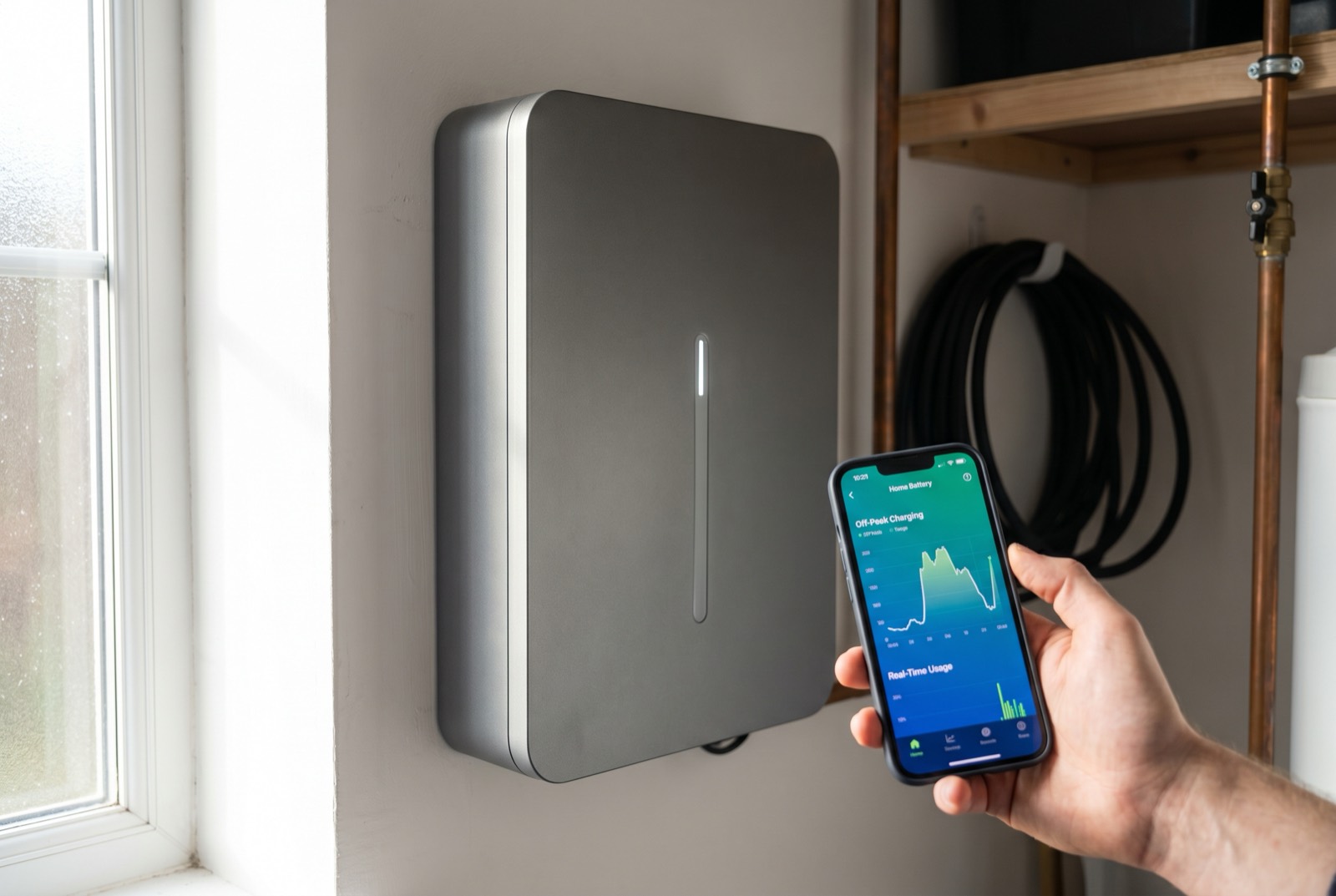
Electricity prices are not fixed through the day. A growing number of UK tariffs charge far less overnight than they do during the evening peak, and a home battery lets you exploit that gap in a straightforward way: charge the battery when power is cheap, then run your home on stored electricity when it is expensive. The approach is sometimes called tariff arbitrage, but the principle is simpler than the name suggests. This article explains how it works, which tariffs make it viable, and what the numbers look like for a typical household.
Why electricity prices vary through the day
The UK power grid is under very different levels of demand at different hours. Early mornings and evenings, when millions of households cook, shower and watch television at the same time, push demand up sharply. The grid must meet that peak using a mix of generation sources, including some that are expensive to run. Overnight, demand falls, renewable generation often continues, and the wholesale price drops considerably. Time-of-use tariffs pass that variation on to the consumer.
Smart meters, which are now widespread in the UK, make it practical for suppliers to bill you at different rates through the day. Without a smart meter, a time-of-use tariff is not possible. If you do not yet have one, your supplier can usually arrange installation at no charge.
What time-of-use tariffs are available in the UK
Several suppliers offer tariffs specifically designed for flexible home technology such as batteries, heat pumps and electric vehicles. They tend to share a structure: one or more cheap windows — often late at night and into the early morning — with higher rates at other times, and a peak rate during the evening rush. The details change over time, so always check the current offerings directly with each supplier. The following are among the most widely discussed as of 2026.
- Octopus Agile: a half-hourly tariff that tracks the wholesale electricity market. Prices can vary significantly from slot to slot, and the cheapest windows are often between midnight and 5 am, though cheap periods can occur at other times too. It rewards flexible devices that can respond to price signals automatically.
- Octopus Go: a simpler structure with a single cheap rate for a set overnight window — historically around four hours — making it easy to schedule charging without watching live prices.
- British Gas Electric Driver and similar EV tariffs: primarily designed for electric vehicle charging, but a home battery can often be scheduled to charge during the same cheap window.
- Intelligent Octopus Go: pairs with compatible batteries and EVs so that charging is scheduled automatically based on prices, without manual input.
- OVO Beyond and comparable products: some other major suppliers offer off-peak windows, though the cheap rate, window length and peak premium all vary — always compare the unit rates and the standing charge together, not just the headline off-peak figure.
The tariff landscape shifts regularly, with rates and products changing as the energy market moves. Before switching, calculate the total annual cost across all the rates, not just the cheap window, because a very low off-peak unit rate can be offset by a high standing charge or a steep peak rate.
How the arbitrage actually works
The word arbitrage simply means buying something cheap and using it (or selling it) at a higher value. With a home battery on a time-of-use tariff, the process is mechanical: a timer or smart controller charges the battery during the cheap window, filling it close to capacity. When that window closes and prices rise, the battery takes over from the grid and powers your home. You avoid importing expensive electricity during the hours you would naturally use most of it.
The financial gain is the difference in unit price, multiplied by the amount of electricity you can realistically cycle through the battery each day. A battery has a finite capacity, so the larger the battery and the bigger the price spread, the larger the potential daily saving. Most home batteries available in 2026 range from around 5 kWh to 15 kWh of usable capacity.
A worked example for a typical home
The following is an illustrative calculation to show the shape of the maths. Your own figures will differ based on your battery size, your tariff rates and how much electricity you use during peak hours. Treat these numbers as indicative, not as a prediction.
- Battery usable capacity: 10 kWh. This is a mid-range residential battery and a common size for a family home.
- Off-peak unit rate: 7p per kWh. This represents an illustrative cheap overnight rate on a time-of-use tariff — actual rates vary by supplier and tariff.
- Peak (daytime/evening) unit rate: 25p per kWh. This is an illustrative standard or peak rate — again, your actual rate will differ.
- Cost to fill the battery overnight: 10 kWh × 7p = 70p.
- Value of that electricity at peak rates: 10 kWh × 25p = £2.50.
- Gross daily saving before losses: £2.50 − 70p = £1.80.
- Accounting for battery round-trip efficiency (typically 85–92%): the battery delivers around 8.5–9.2 kWh of usable power for every 10 kWh put in, so the realistic saving is slightly lower — roughly £1.40 to £1.65 per day in this illustration.
- Annualised (365 days): roughly £510 to £600 per year in this example, assuming you cycle the battery once daily year-round.
A real-world saving will be lower than the theoretical maximum because you cannot always use everything the battery stores, the price spread changes over time, and charging windows do not always align perfectly with your consumption. A realistic expectation for a household doing this well is typically in the range of £300 to £600 per year, depending on battery size, tariff and usage — but your installer can model your specific situation more precisely.
Combining tariff arbitrage with solar panels
Tariff arbitrage and solar generation are complementary rather than competing strategies, and a battery can pursue both at once. During daylight hours the battery charges from your own solar panels — free electricity you would otherwise export at a low Smart Export Guarantee rate. Overnight it charges from the cheap grid window. The two sources fill the battery between them, maximising the hours you spend running from stored power rather than buying at peak rates.
Households with solar and a battery on a time-of-use tariff often report the highest levels of grid independence during spring and summer, when longer days mean the solar contribution is large. In winter, with shorter days and lower sun angles, the grid charging window matters more. The mix shifts with the seasons, but the battery is doing useful work throughout the year.
What to watch out for
Tariff arbitrage is not without its considerations. Cycling a battery once a day, every day, accumulates charge cycles over time. Most modern lithium-iron-phosphate (LFP) batteries are rated for several thousand cycles and carry manufacturer warranties — typically ten years or a certain number of cycles, whichever comes first — but it is worth confirming the warranty terms before you commit to an intensive daily cycling regime.
- Check the battery's cycle warranty: some warranties are expressed in total kWh throughput rather than years, which is the more meaningful figure if you plan to cycle heavily.
- Standing charges matter: a time-of-use tariff often has a higher daily standing charge than a standard variable tariff, which can reduce the net benefit for lower-consumption households.
- Rate changes: suppliers can adjust tariff rates, so a saving you calculate today may be larger or smaller in future years.
- Smart controls: to capture the cheap window reliably, you generally need a battery with smart scheduling or a compatible home energy management system — confirm compatibility before purchasing.
- Grid export restrictions: some battery models and grid connection types have limits on how much power can flow in certain directions; your installer will identify any constraints during the survey.
Does it still make sense without solar?
A battery fitted purely for tariff arbitrage — with no solar panels — can still pay off, but the case is narrower. You are relying entirely on the price spread between cheap and peak rates, with no free solar generation to reduce the charging cost further. In that scenario, the battery's financial return depends heavily on your tariff, how consistently you cycle it and how long you hold the system. Some households find the economics work; others, particularly those with modest peak-time usage, find the payback too long to be attractive on its own.
For many people, a battery fitted without solar is a stepping stone — added in anticipation of panels, or alongside a heat pump or EV where the flexible load gives additional value. An MCS-certified installer can model your specific household consumption and recommend whether a standalone battery, or a combination, makes most sense for your situation.
If you are weighing up whether a battery on a time-of-use tariff could cut your bills, the clearest next step is to have an MCS-certified installer assess your home's consumption, existing setup and tariff options. Renovation Register lists MCS-certified battery storage installers at /installers, and a free project assessment — worth £380, with no obligation — will give you a written recommendation tailored to your property, your usage and the tariffs available to you.
Related on Renovation Register