Scotland has its own dedicated funding route for home energy improvements, separate from the UK-wide schemes available in England and Wales. The Home Energy Scotland Grant and Loan scheme is funded by the Scottish Government and administered by Energy Saving Trust on its behalf. It combines a non-repayable grant with an interest-free loan, making it one of the most generous packages available to homeowners anywhere in the UK. Understanding how the two parts fit together — and what you need to qualify — is the starting point for any Scottish homeowner considering insulation, a heat pump, or other low-carbon upgrades.
The scheme has two distinct components. The first is a grant — a sum of money you never repay. The second is an interest-free loan for costs that exceed the grant. Because the loan carries no interest, the only real cost of borrowing is repaying the principal, which you can spread over five to twelve years depending on how much you borrow. Many applicants use both components together for a single project, with the grant reducing the loan balance they need to clear.
The standard maximum grant is £7,500. Households in rural or island areas of Scotland can access a rural uplift that raises this ceiling to £9,000 — an acknowledgement that installation costs in remote locations are typically higher. Grants are divided by measure type: there is a separate pot for energy-efficiency improvements (insulation, glazing, heating controls) and a larger pot for renewable systems such as heat pumps, biomass boilers, and solar thermal. For renewable systems, up to 75 per cent of eligible costs can convert to cashback — a form of non-repayable grant — which is significantly more generous than the energy-efficiency rate of up to 40 per cent.
The interest-free loan sits alongside the grant to cover costs the grant does not meet. The total loan available is split across three categories: up to £15,000 for energy-efficiency measures, up to £17,500 for renewable heating and generation systems, and up to £6,000 for energy storage (such as battery storage paired with solar PV). These can be combined, giving a theoretical maximum of £38,500. In practice, the amount you can borrow is governed by the scope of work, the installer quotes you provide, and a standard credit score check — there is no income threshold, but you must satisfy the lender's creditworthiness assessment.
The scheme covers a broad range of measures across two categories. It is worth noting that solar PV panels, since June 2023, are only available through the scheme when installed as part of a package that also includes a heat pump or storage heaters — they cannot be funded as a standalone measure.
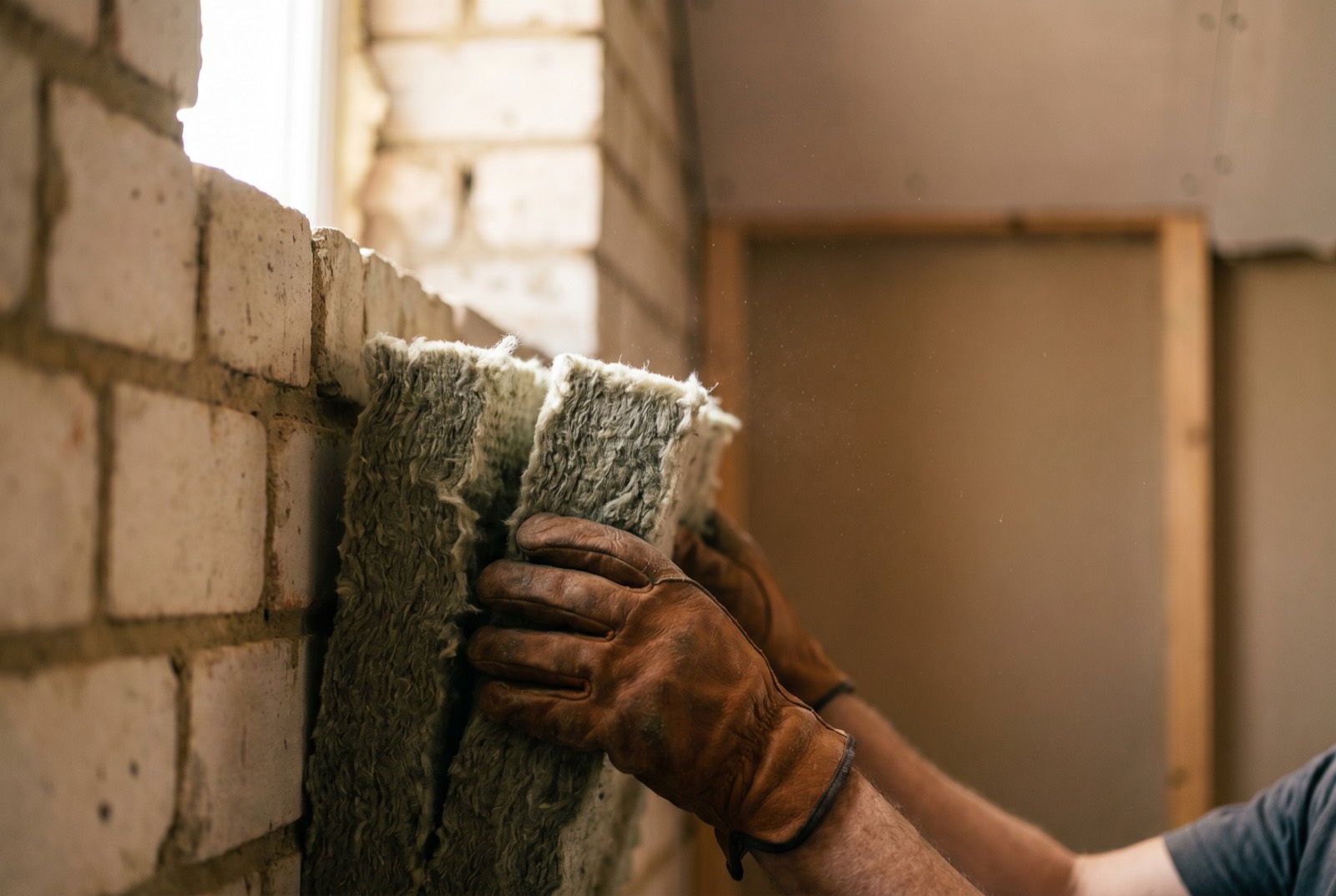
- Energy-efficiency measures: solid wall insulation, loft insulation, cavity wall insulation, double or triple glazing, insulated doors, heating controls
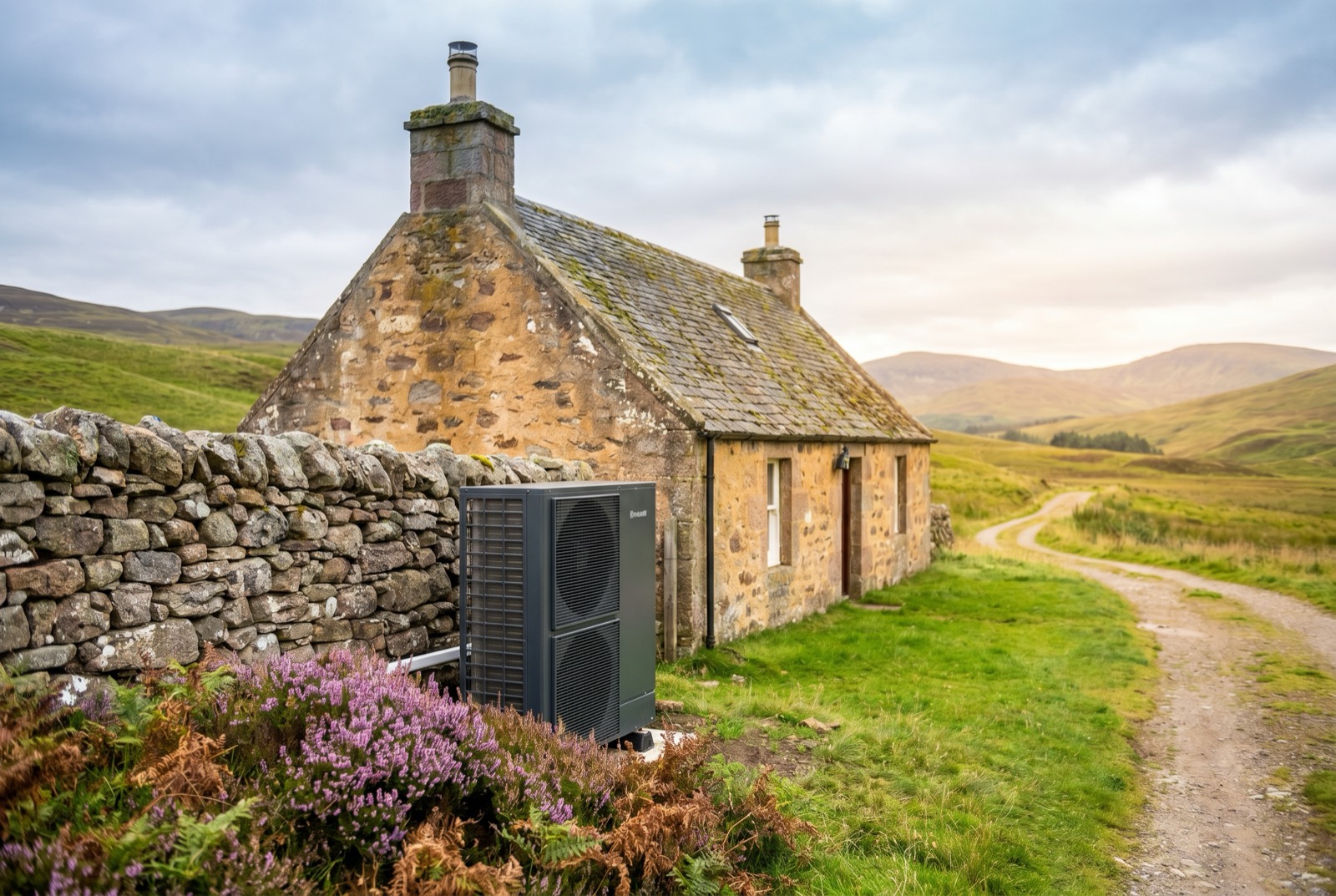
- Renewable heating: air source heat pumps, ground source heat pumps, biomass boilers, solar thermal water heating
- Renewable generation: wind turbines, micro-hydro systems, solar PV (as part of a package with a heat pump or storage heaters)
- Energy storage: battery storage systems recommended in a specialist report
Eligibility is owner-occupier focused. You must own the property, live in it as your main home, and the property must be located in Scotland. Renters, private landlords, business owners, and property developers are not eligible for this particular scheme. There is no means-testing or household income limit — the scheme is open to all Scottish owner-occupiers regardless of earnings — but the loan element requires you to pass a credit score check. You also cannot use the scheme to fund improvements that are already receiving funding from another source for the same measure.
Scottish homeowners and private renters on certain qualifying benefits may be eligible for an entirely separate programme called Warmer Homes Scotland, which can provide support worth £10,000 or more at no cost to the household. Eligibility is linked to receiving specific benefits — such as Universal Credit, Housing Benefit, Income Support, or Adult Disability Payment — or to specific health or age criteria. The two schemes are distinct; if you are declined for one, you may still qualify for the other. Home Energy Scotland advisers can assess which route suits your circumstances during an initial call.
The process begins with a free call to Home Energy Scotland on 0808 808 2282 (also available via callback request on their website). An adviser will discuss your home, your current heating system, and the improvements you are considering. Depending on the measures involved, you may be referred to a specialist for a home visit. Once your adviser confirms eligibility, you are given access to the online application form, which requires a formal quote from an installer. You must have your grant and loan approved before work begins — applications made after work has started are not accepted. Most renewable system applications will also require your property's Energy Performance Certificate (EPC) or a specialist's report recommending the measure.
The Home Energy Scotland scheme operates alongside — but separately from — UK-wide schemes. Scottish homeowners can, in principle, access the Boiler Upgrade Scheme (which offers up to £7,500 towards a heat pump and is administered by Ofgem) and the Energy Company Obligation (ECO4), as well as benefit from the 0% VAT rate that applies to qualifying energy-saving installations. You cannot, however, receive Home Energy Scotland grant funding and another government grant for exactly the same measure on the same installation. Your adviser can help map out which combination of funding sources is permissible and most advantageous for your specific project.
For renewable energy measures — heat pumps, solar thermal, biomass boilers, and similar technologies — your installer must hold MCS (Microgeneration Certification Scheme) certification for the scheme to fund the work. MCS certification is the industry standard that demonstrates an installer has been independently assessed against technical and quality benchmarks. It is also a requirement for accessing the Boiler Upgrade Scheme and for registering with the Smart Export Guarantee (which pays you for surplus electricity exported to the grid). Choosing an MCS-certified installer is not simply a funding formality; it is the clearest signal that the installation will be carried out to a recognised standard, with manufacturer warranties protected and performance guarantees in place.
If you are a Scottish homeowner thinking about insulation, a heat pump, solar panels, or any other low-carbon upgrade, the most straightforward first step is a free assessment. A Home Energy Scotland adviser can confirm what funding you are entitled to, and using a directory of MCS-certified installers ensures that the company you choose meets the standard required to unlock that funding. Getting the assessment before approaching installers for quotes means you go into conversations knowing your budget — and knowing which portion of the cost the grant and interest-free loan will cover.