The UK has more financial support for home energy improvements in 2026 than at any point in the past decade, yet many households never claim it. Schemes overlap, eligibility rules differ, and the landscape shifts as programmes end and new ones open. This guide sets out every active scheme, what it pays, who can access it, and — critically — how to layer multiple sources of support so you capture as much as possible.
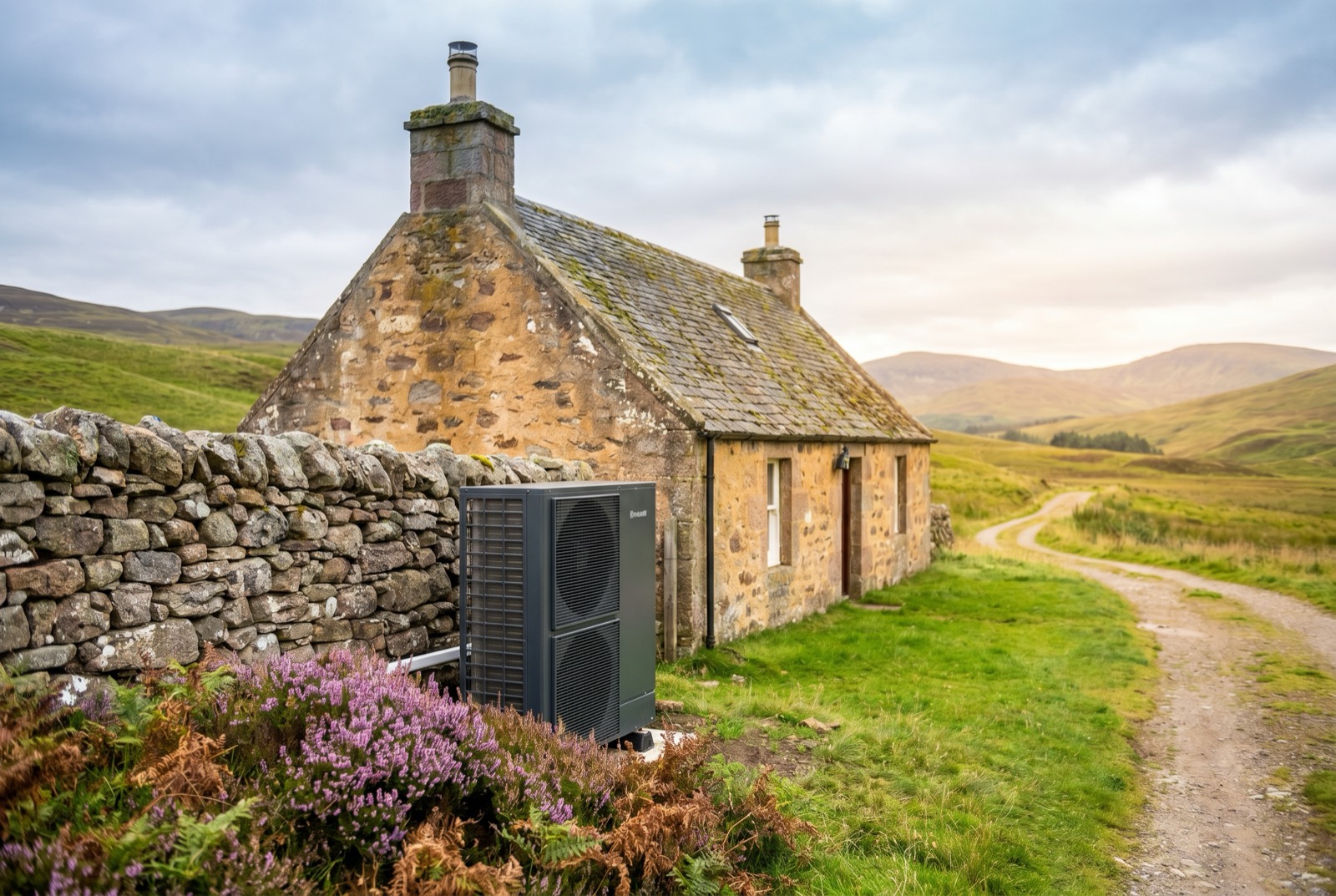
The Boiler Upgrade Scheme (BUS) is the flagship government grant for switching from a fossil-fuel heating system to a low-carbon alternative. It is open to homeowners and non-domestic properties in England and Wales, and the grant is paid directly to your MCS-certified installer, reducing the upfront cost you see on your invoice. The current grant amounts are £7,500 for an air source heat pump, £7,500 for a ground source heat pump (which also covers water source heat pumps and shared ground loops), and £5,000 for a biomass boiler. To qualify, your property must already have a valid Energy Performance Certificate, and any outstanding recommendation for loft or cavity wall insulation on that EPC must have been acted upon — or formally assessed as unsuitable — before the voucher is issued. The scheme has no means-testing: income and benefits are irrelevant. The only requirement is the property type, the technology choice, and the installer holding a valid MCS certification and a BUS registration.
- Air source heat pump: £7,500 grant
- Ground source heat pump (including water source): £7,500 grant
- Biomass boiler: £5,000 grant
- Available in England and Wales only — Scotland and Northern Ireland have separate schemes
- No income test; open to owner-occupiers and landlords
- Installer must be MCS-certified and registered with the BUS
ECO4 is the fourth iteration of the Energy Company Obligation, which places a legal duty on medium and large energy suppliers to fund energy efficiency improvements for low-income and fuel-poor households. Unlike the BUS, ECO4 is means-tested: you typically need to be in receipt of qualifying benefits such as Universal Credit, Pension Credit, or certain income-related payments, or to live in a property in the lowest EPC bands and meet a low-income threshold through your local council's referral route. Where eligible, the scheme can fund a wide range of measures — including insulation, low-carbon heating upgrades, and draught-proofing — with no cost to the household. ECO4 is currently funded until 31 December 2026, following a nine-month extension. Beyond that date, the government's Warm Homes Obligation is expected to take over as the successor programme.
- Targeted at low-income and fuel-poor households
- Qualifying benefits include Universal Credit, Pension Credit, and others
- Local authority referral route available for households just above the benefits threshold
- Covers insulation, heating upgrades, and other efficiency measures
- No household contribution required for eligible properties
- Runs until 31 December 2026; successor Warm Homes Obligation planned thereafter
The Great British Insulation Scheme (GBIS) runs alongside ECO4 but reaches a broader set of households. It covers properties with an EPC rating of D or below in the general group, and it also has a lower-income group for households in bands A to G who receive qualifying means-tested benefits. The scheme focuses on a single primary insulation measure per property — most commonly loft insulation or cavity wall insulation — with the aim of delivering the highest-impact upgrade quickly. Energy suppliers are obligated to fund these installations, and eligible households pay nothing. GBIS is running concurrently with ECO4 and is subject to the same policy review cycle, with delivery expected through 2026.
Launched as part of the government's Warm Homes Plan published in January 2026, the Warm Homes Local Grant channels £500 million through local authorities to owner-occupiers and private renters in England who are on low incomes and live in properties with an EPC rating of D to G. Eligible households pay nothing toward the upgrades, which can include insulation, solar panels, and air source heat pumps where suitable. The programme is delivered at local level, meaning availability and timescales vary by area. To find out whether your council is participating and how to apply, the first step is to check with your local authority directly or use the government's online eligibility checker.
Scotland has its own parallel funding landscape, administered through Home Energy Scotland. The flagship offering for eligible low-income households is Warmer Homes Scotland, which provides £10,000 or more in funding for energy efficiency improvements including insulation and heating system upgrades. For homeowners above the income thresholds, the Home Energy Scotland Grant and Loan provides a combination of grants and interest-free loans for a range of low-carbon technologies — from loft insulation to heat pumps — with a rural uplift for properties in remote areas where installation costs are higher. Scottish homeowners do not access the BUS or ECO4 in the same way as in England and Wales; the equivalent support flows through these Scottish Government programmes. The starting point for any Scottish household is to call Home Energy Scotland on 0808 808 2282, which is a free advice and referral service.
Wales has its own scheme — Nest — funded by the Welsh Government and free to access. It is aimed at households in or at risk of fuel poverty, particularly those on means-tested benefits or with a long-term health condition affected by a cold home. Where eligible, Nest can fund insulation, central heating systems, and renewables at no cost to the household. Homeowners and private tenants in Wales can apply directly through the Nest service, which carries out a whole-house assessment and then commissions the most appropriate measures. ECO4 also operates in Wales alongside Nest, so in some cases households can access both.
The Smart Export Guarantee (SEG) is not a grant — it is a guaranteed right to be paid for renewable electricity you export to the grid. Any household with a qualifying small-scale generation system (solar PV, wind, micro combined heat and power, hydro, or anaerobic digestion) up to 5MW — or 50kW for micro-CHP — can register with an SEG-licensed energy supplier and receive a payment above zero pence per kilowatt-hour for every unit exported. Rates are set competitively by suppliers, so it is worth comparing tariffs before signing up. To qualify, your installation must have been carried out by an MCS-certified installer — this is a non-negotiable requirement for accessing the SEG. The scheme covers Great Britain and has no end date, making it a long-term income stream for solar and other renewable installations.
Since April 2022, the installation of qualifying energy-saving materials in UK residential properties has been subject to 0% VAT, down from the previous 5% reduced rate. This applies to the supply and installation of heat pumps, solar panels (PV and thermal), wind turbines, insulation, draught-proofing, heating controls, and several other measures. The saving is automatic — your installer should apply the zero rate on their quote — but it is worth confirming this on any invoice. The relief applies across England, Scotland, and Wales. On a heat pump installation, removing VAT represents a meaningful reduction in net cost, with the saving scaling with the size of the job.
The most important thing to understand about UK home energy grants is that they are not mutually exclusive. A household in England installing an air source heat pump could access the BUS grant (£7,500), benefit from 0% VAT on the installation cost, and then register for the Smart Export Guarantee if they also have solar panels — all at the same time. A low-income household might access ECO4 for insulation and then separately apply for the Warm Homes Local Grant for a heating upgrade, depending on what their local authority is delivering. In Scotland, the Home Energy Scotland grant can be combined with an interest-free loan for the balance. The key principle is to get a full picture of what is available before committing to any single application route, because some schemes are delivered sequentially or require the property to meet certain conditions before a second measure is funded.
- Start with an EPC if you do not have one — most schemes reference it for eligibility
- Check means-tested routes first (ECO4, GBIS, Nest, Warmer Homes Scotland) as these are fully funded
- If you do not qualify for means-tested support, the BUS is the main route for heat pump and biomass boiler upgrades
- Confirm 0% VAT applies to your installation — it should be reflected automatically in your quote
- If you have or are adding solar PV, register for the SEG with your chosen supplier after installation
- Ask your local council whether Warm Homes Local Grant funding is available in your area
- Always use an MCS-certified installer — it is a condition of the BUS, the SEG, and most funded schemes
The grant landscape in 2026 is genuinely encouraging, but navigating it alone takes time. A free home energy assessment from a qualified assessor or an MCS-certified installer can map out which schemes apply to your property and in what order to pursue them. Use Renovation Register to find MCS-certified installers in your area — every installer listed holds current certification, which is the baseline requirement for virtually every funded scheme described here.
Related on Renovation Register